Computer vision consulting
Computer Vision Consulting & Strategy
- Feasibility tested on your data
- Edge, cloud or hybrid architecture
- Honest build-or-buy advice
- What decision should the system support?Flag damaged pallets before they are loaded
- Where does the imagery come from?Existing dock cameras at 3 warehouses
- How fast must it respond?Before the truck door closes
- Can footage leave the site?Not decided yet
1 open question carried into the design stage.
1/4We start from the business decision, the imagery you have and your constraints, and write down what is still unknown.
Where projects get stuck
Most vision projects fail before a model is trained
Not because the maths is hard, but because the problem, the data or the deployment target was never pinned down. These are the questions we are usually called in to settle.
Will it even work?
Nobody has tested whether your cameras, lighting and angles can support the accuracy you need.What will it cost to run?
Budgets cover the model but miss labelling, inference and the maintenance that follows.Which hardware?
Edge device, on-prem server or cloud API, and how many cameras each can carry.Build or buy?
An off-the-shelf API may cover half your classes. Knowing which half decides the plan.
How we work
Evidence first, architecture second
Every recommendation is tied back to something we measured on your data or your constraints, so you can challenge it.

- Stage 1
Discovery and audit
We start from the decision you want to automate, then look at cameras, lighting, existing footage, data volumes, timelines and any rules about where images may travel.Problem statement and constraints - Stage 2
Feasibility on your data
We test candidate models on a labelled sample of your own images or video and report where they succeed, where they fail and what would fix it.Measured baseline and blockersYOLOVision transformersSAM - Stage 3
Architecture blueprint
Model family, pre- and post-processing, video ingestion, storage and integration points are designed as one pipeline, sized for your throughput.Architecture diagram and stackRTSP ingestTritonMessage queue - Stage 4
Hardware and deployment choice
Edge, on-prem or cloud is decided against latency, connectivity, privacy and volume, with quantisation and compilation planned for the target device.Deployment plan with running costsJetsonTensorRTOpenVINO - Stage 5
Build or buy
We compare off-the-shelf APIs and open models against a custom build on your test data, including what each option locks you into.Recommendation with reasons - Stage 6
Roadmap and handover
A phased plan with a go or no-go gate at each step, starting with a proof of concept and ending with monitoring and retraining in production.Phased roadmap
What we advise on
Consulting capabilities
Each area comes with a written guide, so you can see how we think before you hire us.
Feasibility and ROI
Whether the visual task is worth automating, and what a realistic accuracy target looks like in your environment.Go or no-go, with evidenceIs computer vision worth it?Cost planning
Where the money actually goes: data and labelling, experimentation, inference infrastructure and yearly maintenance.Budget you can defendCost breakdownEdge, cloud or hybrid
Latency, bandwidth, privacy and scale compared for your workload, including on-premise and air-gapped options.Architecture decision, documentedEdge vs cloud guideHardware selection
Which device carries your model at the frame rate and power budget you have, and how many cameras it can serve.Jetson Nano to AGX OrinWhich Jetson for YOLOModel and pipeline optimisation
Quantisation, pruning and compilation to hit latency targets, and where an LLM should reason over structured output instead of raw pixels.Faster without losing accuracyOptimisation in practiceMLOps and lifecycle
Monitoring, drift detection, active learning and safe rollouts designed before launch, not bolted on after.A system that stays accurateManaged services
What you get
Documents your team can act on
Everything is written down and handed over, whether or not you build with us.
- Feasibility report with results measured on your data
- Architecture diagram from camera to integration point
- Hardware and deployment recommendation with running costs
- Build-or-buy comparison with the reasoning behind it
- Phased roadmap with a decision gate at each step
Not sure where to start?
The AI Opportunity Audit
If you have several candidate use cases and no clear first move, we map where AI creates value across your workflows and hand back a prioritised roadmap in 3–5 business days.
Our stack
Supported platforms and technologies
We design production pipelines with tools we have shipped with, across training, optimisation and deployment.
Deep learning frameworks
- PyTorch
- TensorFlow
- ONNX Runtime
- Keras
Vision models
- YOLO (v5–v11)
- Vision Transformers
- SAM
- Florence-2
- Qwen-VL
Hardware acceleration
- NVIDIA CUDA
- TensorRT
- DeepStream SDK
- OpenVINO
- Core ML
Image processing
- OpenCV
- NumPy
- scikit-image
- Albumentations
MLOps and data
- Docker
- Kubernetes
- CVAT
- Roboflow
- MLflow
- Weights & Biases
Languages
- Python
- C++
- TypeScript
- Bash
Our work
Architectures we have designed and shipped
The same engineers who advise on your architecture have built these systems end to end.
 Open Source AI InfrastructureComputer Vision
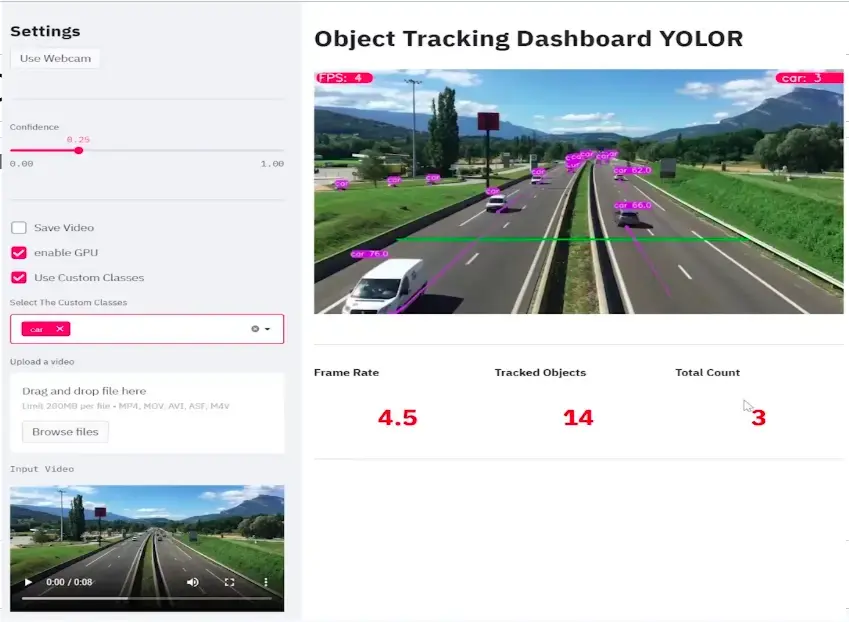
AS-One: Unified Computer Vision Framework for Rapid AI Development
Augmented Startups wanted to simplify how developers experiment with modern computer vision models by unifying multiple detection and tracking frameworks into a single Python interface.
- GitHub stars on AS-One
- 580+
- Detector versions behind one API
- YOLOv5–v9
 Sports AI & Mobile Computer VisionComputer Vision
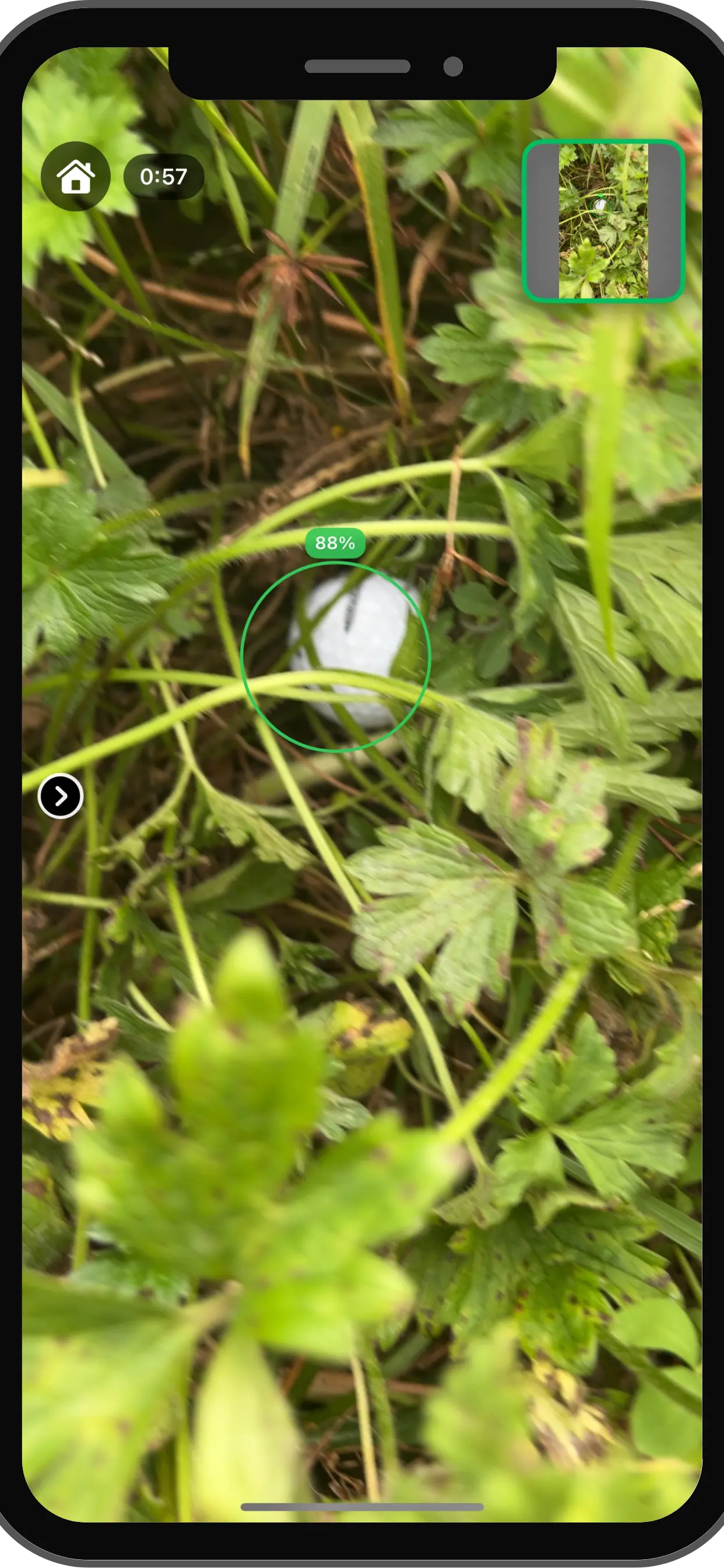
Find My Ball: Real-Time AI Golf Ball Detection on Mobile Devices
FMB wanted to build a mobile app that could automatically detect lost golf balls using the phone camera to help golfers quickly locate balls in challenging terrain.
- On-device inference time
- <30ms
- Detection recall
- 92%
 Sports & MediaComputer Vision
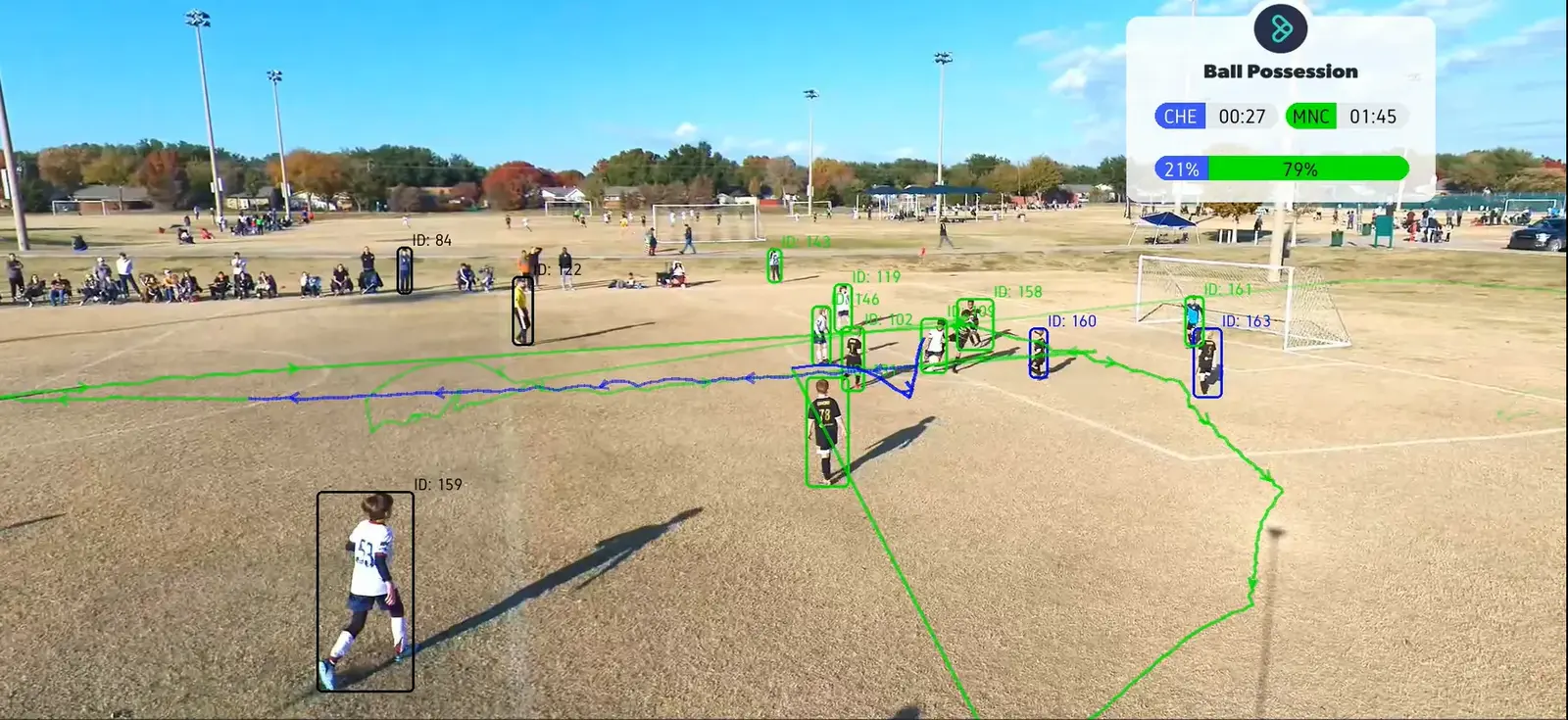
Soccer Match Analytics & Insights
The aim of this project is to give soccer analytics of matches being played. The goal is to build an AI tool that takes as input a video of a soccer match and then analyzes each player and extracts different analytics. This included: 1. Player and ball detection, 2. Player and ball tracking, 3. Player re-identification, 4. Field detection, 5. Event detection including passes, intercepts, goals etc.
Multi-stage CV pipeline. Real-time event detection. Player re-identification.
Read the case study
Getting started
From first call to a working prototype
Step 1: Feasibility call
30 minutes
We review your camera setup, the decision you want to automate and the constraints around it.
- NDA on request
Step 2: Consulting sprint
Scoped with you
Feasibility test on your data, architecture blueprint, build-or-buy view and a phased roadmap.
- Everything handed over in writing
Step 3: Proof of concept
4–6 weeks
If the answer is go, we build a working prototype against the accuracy targets we agreed.
- Measured against your baseline
FAQ
Questions, answered
What teams ask before starting a consulting engagement.
Ready to build instead? See custom computer vision solutions.
A discovery session on the decision you want to automate, a feasibility test on a sample of your own images or video, an architecture recommendation covering models, hardware and where inference runs, a build-or-buy view, and a phased roadmap with a proof of concept as the first step.
We look for a visual task that is repetitive, high volume and costs money or time today, and for an environment stable enough to model. If a simpler answer exists, such as a sensor, a barcode or a rule, we say so. Our guide on whether computer vision is worth it for small and mid-sized companies sets out the same test.
Yes, and we prefer it. We work with a labelled sample of your real images or video, report what the models get right and wrong, and show which conditions cause failures. If the data is not good enough yet, that is the finding.
It depends on latency, connectivity, privacy rules and volume. Tight latency, patchy networks or sensitive imagery point to edge or on-premise; heavy retraining and central analytics point to the cloud. Most systems end up hybrid, and our edge vs cloud guide explains the trade-offs.
If a standard API or open model covers your case, that is the recommendation. Custom models are worth it when the classes, accuracy or deployment constraints are specific to your business, and we make that call against your test data rather than in the abstract.
Yes. Many clients move straight into a proof of concept, typically 4–6 weeks, and then to production with our engineering team, or hire our engineers into their own team. You are not tied to either path.
Related
Keep exploring
- CompanyAI Opportunity AuditFind where AI pays off in your business before you build anything.
- Computer visionCustom computer vision modelsModels trained on your own images, video and edge cases.
- Computer visionHire AI engineersDedicated computer vision and ML engineers who join your team.
- Computer visionAI engineering servicesConsulting, custom models, training, edge deployment and managed services.
Book a strategy session
Talk to an AI engineer about your project
Tell us what you want to automate. The first call is a 30-minute working session with an engineer, not a sales pitch.
- Send the form, it takes 2 minutes
- We reply within 1 business day, under NDA if you need it
- A 30-minute call to scope feasibility and next steps