Industries
AI Solutions for Healthcare
- Private, on-premise and air-gapped deployment
- Built around your workflow
- You own the code and the models
Input
- Internal reports
- Trial updates
- Research documents
On your servers
- Retrieval over a local index
- Quantized Mixtral 8x7B
Output
- Answers with sources
- 5–7 seconds
- No external APIs
Case study: PharmaBrain for Atacana
Solutions and use cases
Healthcare AI solutions we have shipped
Each of these is running work, not a concept: a private research assistant, an orthopedic screening pipeline, and AI inside consumer wellness apps.
Private LLMs for healthcare
A research assistant that answers questions over your own documents, running on your servers with no calls to outside APIs.Answers with sources in 5–7 secondsPharmaBrain case studyMedical imaging and 3D reconstruction
Medical computer vision that segments bones, finds anatomical landmarks and estimates 3D geometry from a standard 2D X-ray.Clinical AI analytics: CPAK, mHKAA, LDFA, MPTAX-ray to 3D case studyWellness recommendations
Meal, exercise and meditation recommenders that adapt to a user's goals, restrictions and progress, on web, iOS and Android.Five AI modules in one appHā Health case studyPersonalised nutrition
A meal-planning agent that turns an intake form into weekly plans, everyday recipes and a shopping list, delivered as a PDF by email.Guardrails on ingredients and quantitiesgbMeals case studyMedical document processing
Extraction and classification for the paperwork around care: lab reports, prescriptions and claims, validated before anything is written back.95%+ field-level accuracy on typical documentsDocument AILLM safety guardrails
Input and output filters, retrieval that keeps answers tied to real sources, and human review where it matters.For chatbots, documentation and decision supportGuardrails guide
Our work
Three healthcare builds, three very different constraints
A medical research assistant that never goes online
Atacana's database grows daily with news reports, clinical trial updates and drug discovery announcements, and none of it could go to a public cloud. PharmaBrain indexes those documents on local servers and answers questions from them using a quantized Mixtral 8x7B model.
Because retrieval runs first, answers stay tied to the documents rather than to whatever the model remembers.
- Runs entirely on the client's own servers
- 8-bit quantization for 5–7 second answers
- No calls to external APIs
Incoming reports
- trial-update-ax214.pdf
- news-digest-0412.html
- pipeline-review-q2.pdf
- conference-abstracts.pdf
- regulatory-notice-17.pdf
Vector index on local server
5 new documents chunked and embedded
1/4New reports are chunked, embedded and added to a vector index on the client's own servers. Nothing is sent to an outside service.
Orthopedic screening from an ordinary X-ray
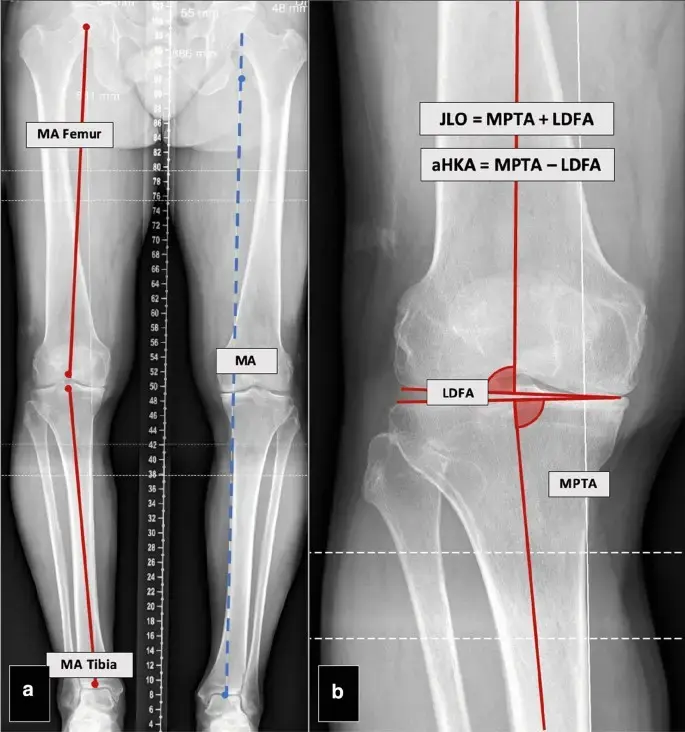
- CPAK, mHKAA, LDFA and MPTA calculated automatically
- Approximately 75–80% accuracy, for initial screening
- Deployed on AWS for clinical turnaround
Wellness AI people use daily
- Recipes checked against dietary restrictions before users see them
- Routines that adapt as users log progress
- Plans turn into a priced grocery list

Safety
Guardrails, not good intentions
Healthcare is high stakes: an unchecked model can leak identifiers or state something that is confidently wrong. We treat safety as engineering, with layers you can test and log.
The same layers apply whether the model drafts clinical documentation, answers patient questions or supports a clinical decision. Our engineering guide covers the details, including the regulatory questions to ask early.
- Stage 1
Filter what goes in
Prompts are scanned for identifiers and for requests the system should not answer, such as asking for a diagnosis. Identifiers are removed or pseudonymised before the model sees them.Clean, minimal prompt - Stage 2
Run the model where the data lives
Self-hosted or private-cloud models keep records inside your environment. Nothing is sent to a consumer chat interface.No data leaving your network - Stage 3
Ground answers in real documents
Retrieval puts the source text in front of the model, so answers cite documents instead of recalling them. This is the pattern behind PharmaBrain.Answers with sources attached - Stage 4
Filter what comes out
Output checks catch identifiers, unsafe advice and claims that do not match the retrieved sources. Blocked responses are logged with the reason.Auditable refusals - Stage 5
Keep a human in the loop
A qualified person reviews anything that touches care, and every prompt, response and guardrail trigger is logged so decisions can be traced later.Reviewed, traceable output
Built for trust
Deployed inside your compliance environment
We do not ask you to move patient data to us. We deploy into your environment, for example SOC 2 or HIPAA-aligned infrastructure, and follow your security policies.
Your infrastructure
Private VPC on AWS, GCP or Azure, air-gapped on-premises servers, or edge devices.Encryption in transit and at rest
The pipelines we build encrypt data as it moves and where it is stored.Role-based access
Access to project data is limited to the people who need it for the work.No training on your data
Your data is used for your project only, not to train other models, unless you agree.You own the output
Source code, trained model weights and deployment configuration are handed over at the end.Paperwork first
We sign your NDA before data is shared and answer security questionnaires or a DPA.
How we work
From use case to production, with a checkpoint at every step
Healthcare teams work with us because the system is built for their workflow and validated against it before it goes anywhere near production.
- Custom systems built for your workflow, not off-the-shelf tools
- Secure cloud, private infrastructure or fully on-premise deployment
- Production APIs and pipelines, monitored and maintained, not just prototypes
- Encryption, role-based access and no training on your data without permission
- Source code, model weights and deployment configuration handed over to you
- Output validated against your own workflows and reviewed by your specialists
Step 1: Use case discovery
30 minutes
We look at the data you have, the decision it should support and what is realistic, then agree the success criteria.
- NDA on request
Step 2: Proof of concept
4–6 weeks
A working system on your own data, measured against the benchmark your team already trusts.
- Accuracy targets agreed up front
Step 3: Production deployment
Ongoing
Deployed into your environment, monitored, and retrained as your data and workflows change.
- You own the IP
Not sure which use case to start with? An AI opportunity audit maps the options in 3–5 business days.
FAQ
Questions, answered
What healthcare and digital health teams ask us first.
Need the model to stay inside your network? See private and on-prem LLMs.
We deploy into your compliance environment (for example, SOC 2 or HIPAA-aligned infrastructure) and follow your security policies. The pipelines we build encrypt data in transit and at rest, access to project data is role-based, and we do not use your data to train other models without your permission. Where data cannot leave your network, the system runs on your own servers.
Yes. We deploy into private VPCs on AWS, GCP or Azure, into air-gapped on-premises servers, and onto edge devices. PharmaBrain, the medical research assistant we built for Atacana, runs entirely on the client's own servers with no calls to external APIs.
Yes. Our healthcare projects range from a hospital in the US, where we built an orthopedic screening pipeline, to digital health products such as Hā Health and gbMeals, where AI sits inside a consumer app.
X-ray images, and the documents around care and research: lab reports, prescriptions, clinical trial updates, research papers and news reports, plus structured records exported from your systems. We confirm the exact formats and sample files in the scoping call.
Yes. We have integrated with hospital systems on more than one healthcare project. Results are delivered through an API or as structured exports, so the systems your teams already use can consume them. Each integration is scoped before the build, including what your EHR, PACS or lab system can send and receive.












Related
Keep exploring
- LLMs & agentsSovereign AIPrivate LLMs and vision models on your own servers, VPC or air-gapped network.
- CompanySecurity and IPNDAs, IP ownership, data handling and private deployment options.
- Computer visionCustom computer vision modelsModels trained on your own images, video and edge cases.
- Document AIDocument AI (IDP)Invoices, contracts and forms read, validated and routed into your systems.
Book a strategy session
Talk to an AI engineer about your project
Tell us what you want to automate. The first call is a 30-minute working session with an engineer, not a sales pitch.
- Send the form, it takes 2 minutes
- We reply within 1 business day, under NDA if you need it
- A 30-minute call to scope feasibility and next steps