Computer vision managed services
Managed Computer Vision Services
- Drift and accuracy monitoring
- Relabelling and retraining
- Staged rollouts with rollback
1/4Accuracy, confidence and latency are tracked in production. A drop below the agreed threshold raises an alert.
Why it matters
A vision model is never finished
The world in front of the camera keeps changing. Without monitoring, accuracy slips quietly until someone notices wrong alerts or missed defects.
Maintenance is the most ignored line in most budgets. Our cost breakdown of a computer vision system puts ongoing retraining, monitoring and fixes at roughly 15–40% of the original system cost per year.
Lighting and seasons
Night shifts, glare and winter light look nothing like the training data.Cameras move
A bumped or replaced camera changes angles, focus and resolution.New products
New packaging, uniforms or SKUs appear that the model has never seen.Infrastructure
Devices overheat, drivers update, streams drop and latency creeps up.
| Topic | Deploy and hope | Managed by AxcelerateAI |
|---|---|---|
| Drift | Found weeks later, from user complaints | Caught by thresholds on accuracy and confidence |
| Retraining | Ad hoc, when someone has time | Scheduled or triggered, focused on hard cases |
| Releases | Swap the model and watch what breaks | Validation gate, shadow run, staged rollout, rollback |
| Ownership | Falls on whoever built the first version | A named team with agreed response times |
How it works
Monitor, relabel, retrain, redeploy
A closed loop that turns production mistakes into better models, with a person checking every step that changes what runs in production.
- Works with models we built and models you built
- Cloud, on-prem and edge fleets
- Model weights versioned like code
- Stage 1
Agree the baseline
We measure current accuracy on a representative test set and agree thresholds for accuracy, confidence and latency that reflect your business risk.Baseline and alert thresholds - Stage 2
Monitor in production
Latency, throughput, confidence distributions and device health are logged continuously, and accuracy is checked on regularly reviewed samples.Health dashboardPrometheusGrafana - Stage 3
Alert and triage
When a threshold is crossed we find the cause: new data, a model weakness, or a hardware and pipeline issue. Not every alert needs retraining.Root cause and fix plan - Stage 4
Collect and relabel
Active learning pulls the frames the model is least sure about. Annotators label them to the agreed guidelines, with quality checks.New labelled examplesCVATActive learning - Stage 5
Retrain and validate
A candidate model is trained and must beat the live model on a fixed test set, including slices for the conditions that caused the drift.Approved model versionPyTorchMLflow - Stage 6
Roll out safely
The new version runs in shadow mode, then goes to a canary site and the wider fleet, with the previous version ready for rollback.Updated fleet, loop restartsDockerKubernetesNVIDIA Triton
What's covered
Everything after go-live
We scope the service to how critical the system is. These are the parts teams usually hand over.
Computer vision monitoring
Drift detection on accuracy and confidence, plus latency, throughput and error tracking with alerts.Early warning before users noticeModel maintenance and retraining
Active learning pipelines, relabelling and regular retraining so the model keeps up with real conditions.Scheduled and on-demand model refreshModel training serviceEdge fleet updates
Over-the-air model updates for NVIDIA Jetson and other devices, rolled out in stages with rollback.Devices kept on known-good versionsEdge deploymentInfrastructure and cost
Batching, caching and right-sized GPUs, because inference often becomes the largest long-term cost.Lower GPU spend at the same speedWhat drives CV costsSupport and incidents
A named team that fixes pipeline bugs and incidents, with coverage and response times set in your contract.Escalation path agreed up frontReporting
Regular reports on accuracy, incidents and changes, so stakeholders can see the system is doing its job.Clear record of every model version
At production scale
We build systems meant to run for years
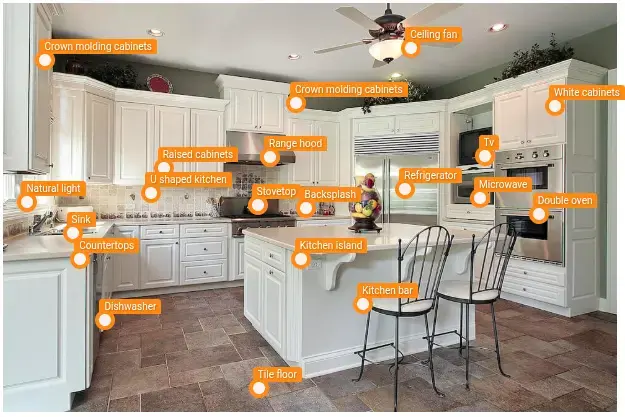
Property image intelligence for PropTexx
- Millions of images processed monthly
- About 250 ms per image
- 50+ property features and 15+ compliance violation types
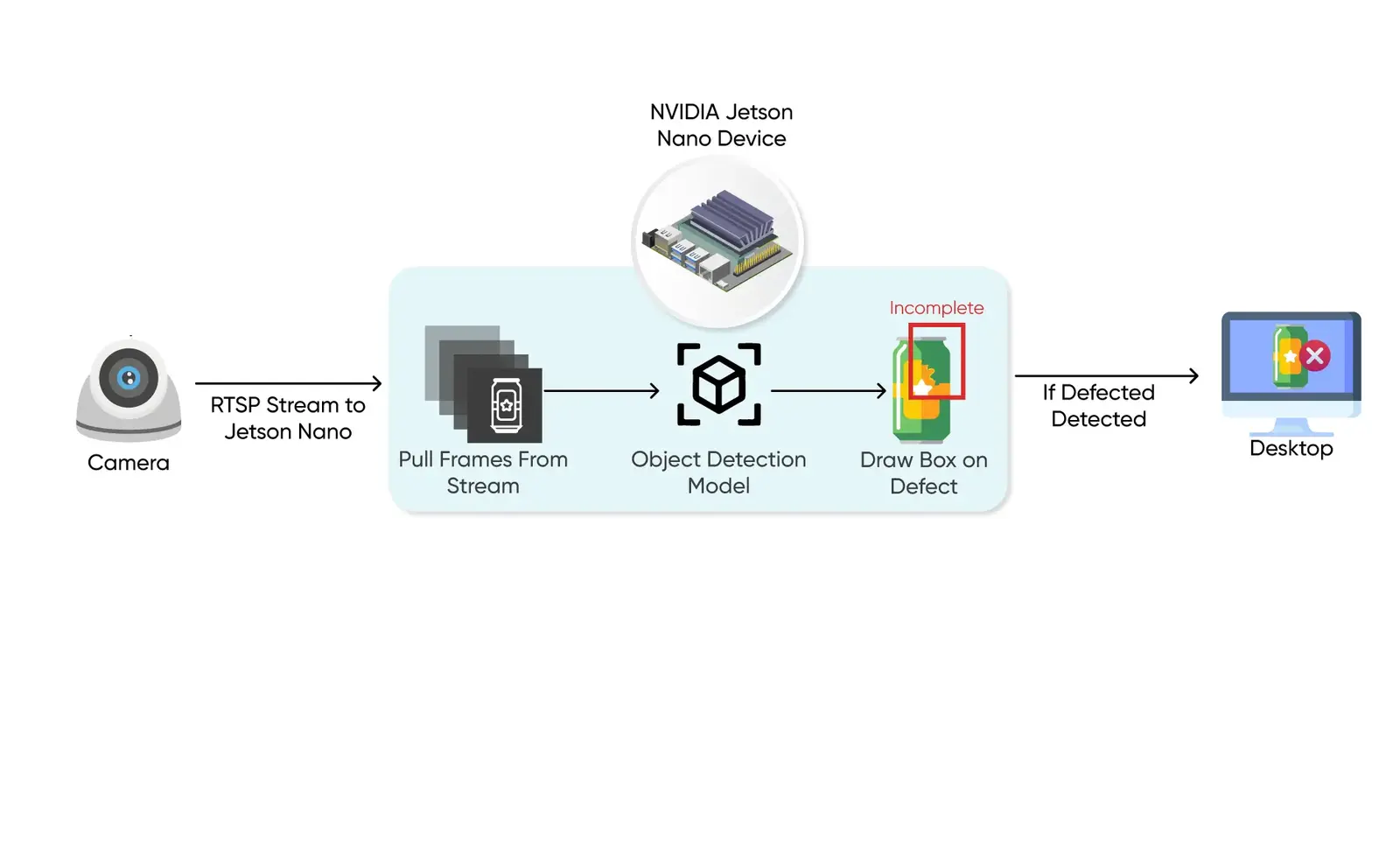
Edge fleets that keep improving
- Device health and model accuracy in one view
- Hard examples collected without streaming video
- Staged over-the-air updates
MLOps infrastructure
Runs where your data is allowed to be
We containerise pipelines with Docker and Kubernetes and serve models with NVIDIA Triton where it fits, in your cloud account, on your servers or on edge devices.
- Deploy in your own cloud or on-premises
- Model weights and configuration versioned in a registry
- Automated CI/CD for model releases
- Access limited to what the service needs
Getting started
Start with a health check
Whether we built the model or not, we first find out how it is really performing.
Step 1: Health check
Review
We review the model, pipeline and infrastructure, and measure accuracy on fresh production data.
- Clear list of risks
Step 2: Set up the loop
Onboarding
Monitoring, alert thresholds, labelling guidelines and a release process are put in place.
- Baseline agreed with you
Step 3: Ongoing operation
Ongoing
We monitor, retrain and redeploy, and report back on accuracy and incidents.
- Response times in your contract
FAQ
Questions, answered
Common questions about monitoring, maintenance and support.
Need engineers inside your own team instead? Hire computer vision developers.
We take responsibility for keeping your computer vision system accurate and running after launch: monitoring, relabelling, retraining, redeploying and fixing issues, so your internal team can focus on product work.
We track accuracy on regularly reviewed samples, confidence distributions and latency against a baseline agreed at the start. When a metric crosses its threshold we raise an alert, collect the frames the model struggles with, relabel them and retrain. A person reviews every candidate model before it replaces the live one.
Coverage hours, response times and escalation paths depend on how critical the system is. We agree them with you and write them into your support contract rather than offering a one-size-fits-all SLA.
Yes. Retraining runs on a schedule or when monitoring shows performance dropping, using active learning to focus labelling effort on the hardest cases. New models must beat the live model on a fixed test set before rollout.
Monitoring can run inside your environment. We work from performance metrics and system logs, and any frames used for relabelling are handled according to the data rules we agree with you, including keeping them on your own infrastructure.
Yes. We manage models on cloud GPUs, on-prem servers and edge devices such as NVIDIA Jetson, including hybrid setups where edge devices run inference and the cloud handles retraining.
Response times are agreed up front in your support contract, with the fastest response reserved for the systems your operations depend on most.
Related
Keep exploring
- Computer visionEdge deploymentModels optimised for NVIDIA Jetson, mobile and on-prem hardware.
- Computer visionModel trainingData labelling, training, evaluation and retraining for vision models.
- Computer visionHire AI engineersDedicated computer vision and ML engineers who join your team.
- CompanySecurity and IPNDAs, IP ownership, data handling and private deployment options.
Book a strategy session
Talk to an AI engineer about your project
Tell us what you want to automate. The first call is a 30-minute working session with an engineer, not a sales pitch.
- Send the form, it takes 2 minutes
- We reply within 1 business day, under NDA if you need it
- A 30-minute call to scope feasibility and next steps