Real estate image intelligence
Computer Vision for Real Estate
- Room, feature and condition tags
- Compliance and privacy checks
- REST API or batch
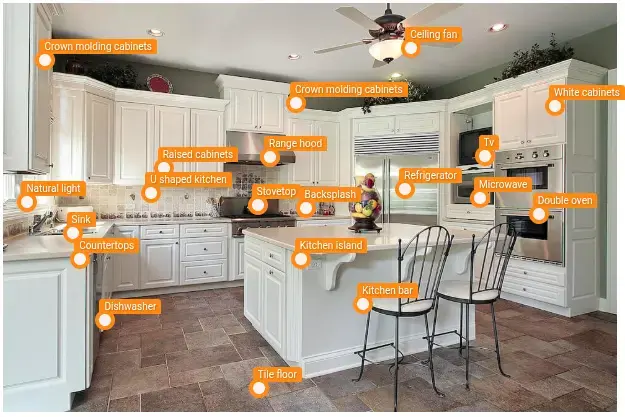
- 4b-01.jpgKitchen
- 4b-02.jpgLiving room
- 4b-03.jpgPrimary bedroom
- 4b-04.jpgBathroom
- 4b-05.jpgFront exterior
1/4Every photo in the listing is sorted by room type and scene, so a kitchen is tagged as a kitchen before anything else runs.
Why it matters
Property photos hold data nobody has time to extract
Marketplaces and brokerages take in huge volumes of photos every day. Checking them by hand is slow and inconsistent, and what the photos show rarely makes it into search filters, valuation models or inspection reports.
Manual moderation
Reviewers open every photo to catch watermarks, faces and plates. It is expensive and it does not scale with listing volume.Unsearchable listings
A kitchen island or a pool is visible in the photo but missing from the listing data, so buyers cannot filter for it.Condition is guesswork
Stains, cracks and wear are judged photo by photo, differently by every person who looks.Duplicates and reposts
The same photos appear across listings and portals, which clutters search and hides fraud.
| Topic | Manual photo review | Property image analysis pipeline |
|---|---|---|
| Speed | Minutes per listing, queues at peak times | About 250ms per image in our PropTexx deployment |
| Listing data | Features typed in by agents, often incomplete | 50+ property features tagged from the photos |
| Compliance | Spot checks that miss overlays and PII | Every photo checked for watermarks, contact details, faces and plates |
| Consistency | Depends on the reviewer | The same rules on every image, with the box that triggered each flag |
How it works
From raw upload to a structured listing record
Specialist models each do one job well. Their outputs are merged into one record per photo and per listing, with confidence scores and locations kept for review.

- Stage 1
Ingest photos, tours and inspection images
Listing uploads, frames sampled from video tours, and camera or drone inspection images come in through an API or a batch backfill. Blurry and near-duplicate frames are filtered out early.Clean image set per listingREST APIBatch jobs - Stage 2
Classify rooms and scenes
Each image is labelled as kitchen, bathroom, bedroom, living area, exterior and so on, so later models know what to look for and listings can be ordered sensibly.Room type per photo - Stage 3
Detect features and finishes
Object detection and segmentation models locate appliances, fixtures, windows, flooring and amenities such as kitchen islands and pools.Tagged features with boxesYOLO-based detectionSemantic segmentation - Stage 4
Assess visible condition
Defect models look for cracks, water stains, mold and wear, and give each finding a location and a severity so inspectors know where to look first.Condition flags with severityYOLOv8Mask R-CNN - Stage 5
Check compliance, privacy and duplicates
Watermarks, phone numbers, logos and other overlays are caught on upload. Faces and license plates are found for redaction, and reposted photos are matched with perceptual hashing.Pass, hold or redact decisionPerceptual hashing - Stage 6
Return structured data
Everything is merged into one record your platform consumes: search filters, listing quality scores, moderation queues, or features for valuation models.JSON per photo and listingJSONWebhooks
What it does
Visual intelligence for listings, inspections and valuation
We scope the label set and rules to your platform. These are the capabilities real estate teams ask for most.
Room and amenity tagging
Room types, appliances, finishes and amenities extracted from standard listing photos and turned into search filters.Feature tags per photo and per listingListing image taggingListing compliance checks
Watermarks, agent contact details, logos and other overlays that break portal rules are flagged before a listing goes live.Violation type and locationHow PropTexx uses itPrivacy redaction
Faces, license plates and house numbers are located so they can be blurred automatically or sent for review.Redaction boxes per imageCondition and defect detection
Cracks, leaks, stains and roof wear detected from photos, fixed cameras or drones, with severity and location for follow-up.Findings with severity scoresAutomated inspection guideValuation signals
Condition, finish quality and renovation level become structured features that valuation models can use alongside comps.Scores and features for AVMsImages and valuation accuracyDuplicate and repost detection
Perceptual hashing and image similarity find the same photos across listings and portals, even after resizing or cropping.Matched listing pairs
In practice
What we have built for PropTech platforms
Listing tagging and compliance at marketplace scale
- Room types, features and amenities tagged
- Watermarks, faces and plates flagged on upload
- Manual moderation reduced to exceptions
PropTexx image intelligence, in production
- Property features tagged automatically
- 50+
- Compliance violation types detected
- 15+
- Processing time per image
- ~250ms
- Lift in buyer click-through rate
- 15%
Privacy and compliance checks before a listing goes live
- Faces, license plates and house numbers
- Phone numbers, logos and watermarks
- Rules configured per portal

Inspection and condition assessment
- Cracks, leaks, stains and roof damage
- Edge filtering keeps bandwidth low
- Reports with photos, severity and location

Virtual staging that keeps the real room
- Room geometry and lighting preserved
- Several interior styles
- Consistent across views of the same room
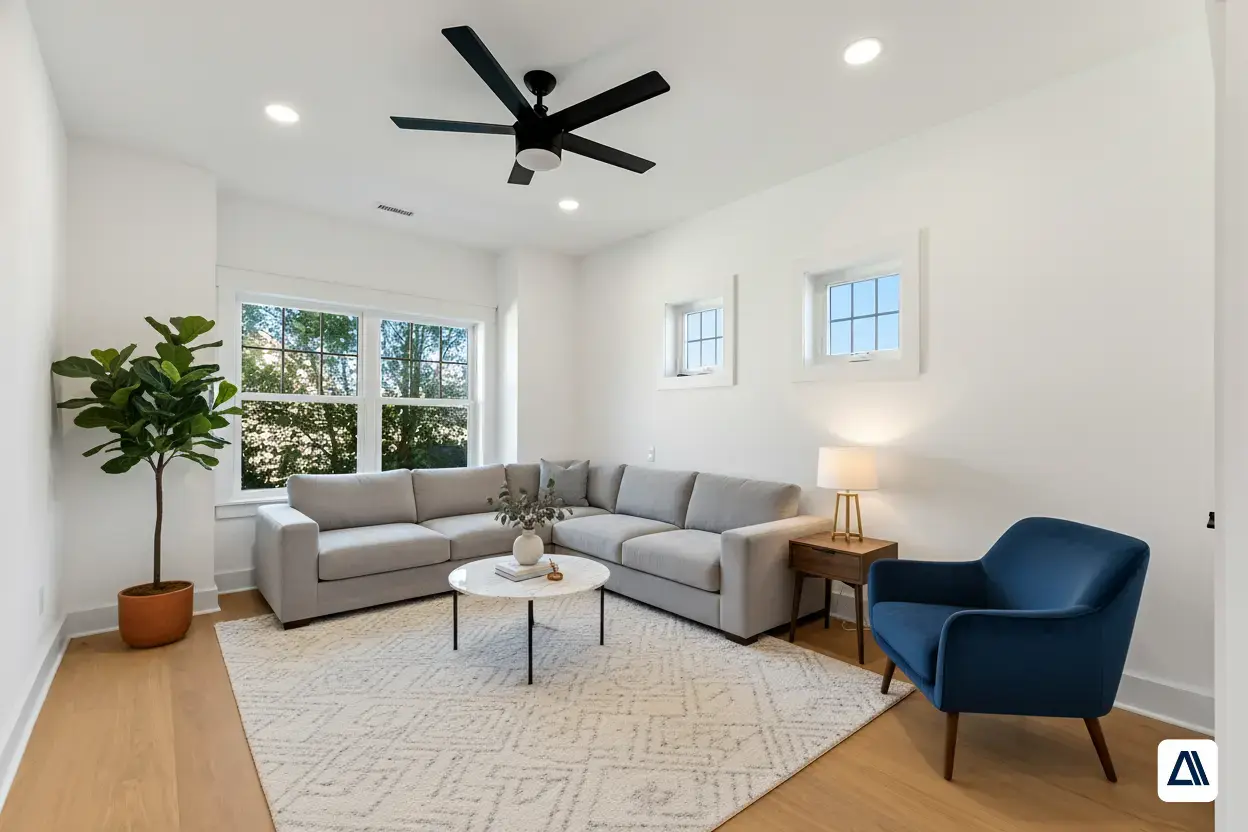
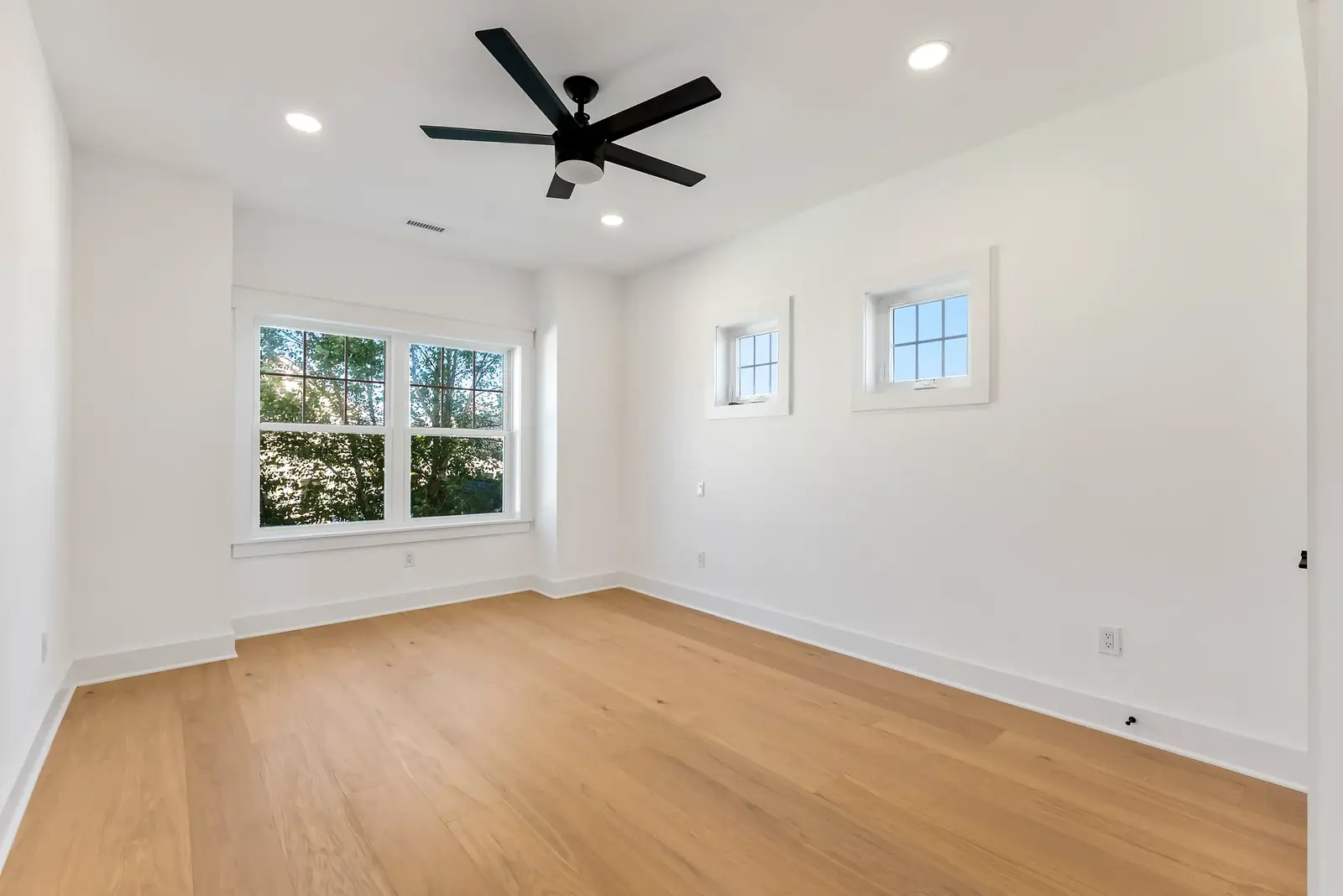
Image features that improve valuation models
- Condition and renovation level scores
- Style and interior quality detection
- Features aggregated per property

Beyond photos
Floor plans and documents in the same pipeline
Listings are more than photos. The same platform can read floor plans for room areas and layouts, and pull figures from offering memorandums and leases.
- Floor plan AI
Floor plan analysis
Rooms, walls, doors and areas read from plans. - OM parsing
Document AI
Rent rolls and deal terms pulled from OMs.
Integration and deployment
Plugs into the upload flow you already have
Call it synchronously on upload, run it over your back catalogue, or both. For sensitive imagery it can run in your own cloud or on your servers; see how we handle data.
REST API
One call per image or listing, returning tags, flags and boxes as JSON.Batch backfill
Process an existing catalogue to populate search filters and quality scores.Review queue
Low-confidence tags and held listings go to a reviewer, not straight to buyers.- Edge deployment
Private or edge
Run in your VPC, on-prem, or on edge devices for inspection cameras.
Getting started
Prove it on your own photos first
Start with a sample of real listings and your current moderation decisions as the benchmark.
Step 1: Scoping call
30 minutes
We look at sample photos, your listing schema and portal rules, and agree which tags and checks matter.
- NDA on request
Step 2: Proof of concept
4–6 weeks
Models trained or fine-tuned on your images and measured on a held-out sample against agreed accuracy targets.
- Accuracy reported before production
Step 3: Production
Ongoing
API integrated with your upload flow, monitored, and retrained as new photo styles and rules appear.
- You own the IP
FAQ
Questions, answered
What PropTech and brokerage teams ask before a pilot.
Need generative imagery instead? See AI virtual staging.
Accuracy depends on your image data and label set, so we measure it on a held-out sample of your own photos during the proof of concept and report it before production. Fine-tuning on your portfolio style typically improves results further.
Yes. We provide compliance detection that identifies watermarks, phone numbers, logos, and other forbidden overlays as images are uploaded.
We detect visible defects such as mold, cracks, water stains, and wear-and-tear, helping platforms and inspectors prioritize physical visits.
Yes. We offer a scalable REST API for listing image analysis so you can integrate room detection, compliance checks, and amenity extraction directly into your workflow.
Yes. Our system can process frames from video tours to extract the same structured data as still photos.
We use perceptual hashing and image similarity algorithms to detect duplicates and cross-posted listings efficiently.
A proof of concept on a sample of your own photos typically takes 4–6 weeks. We agree the labels, rules and accuracy targets first, then measure against your current manual review.
Related
Keep exploring
- PropTechListing image taggingProperty features tagged and compliance issues caught on every listing photo.
- PropTechAI virtual stagingPhotorealistic staged listing photos that keep the room's real architecture.
- Construction & drawingsFloor plan analysisRooms, walls, doors and symbols read from drawings and returned as structured data.
- IndustriesAI for real estateStaging, image tagging, valuation and document AI for brokerages and PropTech platforms.
Book a strategy session
Talk to an AI engineer about your project
Tell us what you want to automate. The first call is a 30-minute working session with an engineer, not a sales pitch.
- Send the form, it takes 2 minutes
- We reply within 1 business day, under NDA if you need it
- A 30-minute call to scope feasibility and next steps