Case study
Smart Temperature Anomaly Detection
- Client: Celsi
- Industry: Logistics
- AI capability: Predictive Analytics
The challenge
Every freezer has its own rhythm, so fixed thresholds fail
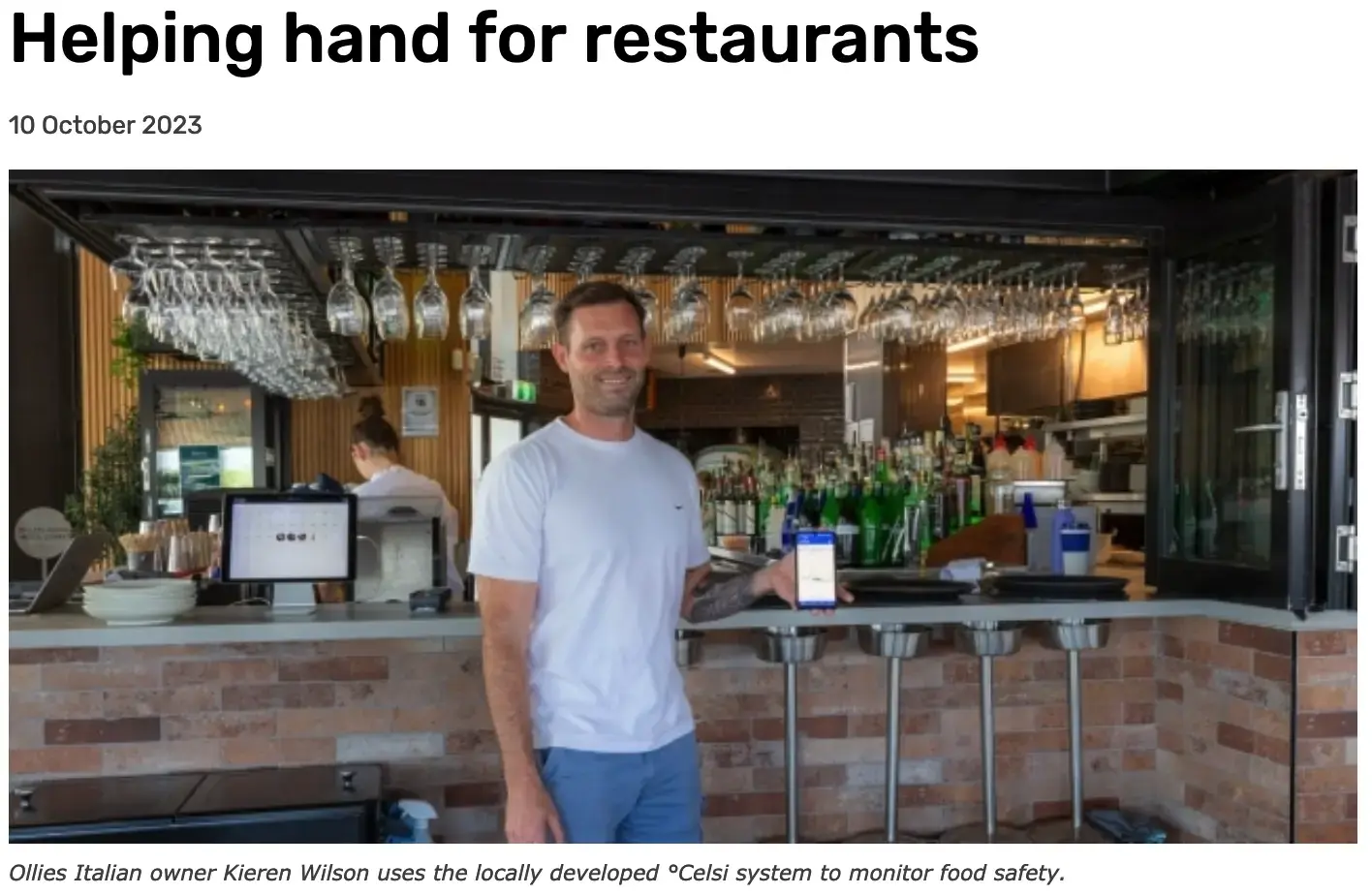
Temperatures in cold storage areas often follow a frosting-defrosting cycle which can vary across different refrigerators. Furthermore, temperature cycles also depend on the environment. So simply raising an alarm if the temperature went beyond a certain range of value would have either raised too many false alarms or have missed out on a lot of different anomalies. Instead, we required a dynamic system that can adapt to different refrigerator cycles and environmental changes.
What we built
A forecast per unit, and alarms on the deviation
The model learns what normal looks like for that refrigerator.
- Stage 1
Learn each unit's own cycle
Cold storage runs a frosting and defrosting cycle that differs between refrigerators and moves with the environment around them. The model is fitted per unit rather than to one global rule.Per-unit temperature profile - Stage 2
Forecast the next readings
A machine learning time series model predicts what the temperature should do next, given that unit's cycle and its surroundings.Expected temperature curve - Stage 3
Alarm on the deviation, not the value
An alarm is raised when the actual reading departs from the forecast. Normal defrost peaks stay quiet, while a genuine fault shows up as a gap between the two lines.Anomaly alerts
Ultra-low freezer: a spike in the real readings departs from the forecast, which is what triggers an alarm.
The impact
Alarms that mean something, with nobody watching
- A temperature model per unit
- Normal defrost peaks stay quiet
- No continuous manual supervision
Our AI system was able to automatically raise alarms whenever temperatures were anomalous thereby reducing chances of spoilage and ensuring freshness of stock. Automating this process also eliminated the need for continuous manual supervision.
Project showcase
More from the project
Freezer with regular defrost peaks: the model learns the cycle, so normal peaks are not flagged. Irregular cycles are forecast closely, so the alarm threshold follows each unit's own behaviour. A cold room during a long warm period, with the forecast tracking real readings through the change.
Keep exploring
Related case studies
Book a strategy session
Talk to an AI engineer about your project
Tell us what you want to automate. The first call is a 30-minute working session with an engineer, not a sales pitch.
- Send the form, it takes 2 minutes
- We reply within 1 business day, under NDA if you need it
- A 30-minute call to scope feasibility and next steps