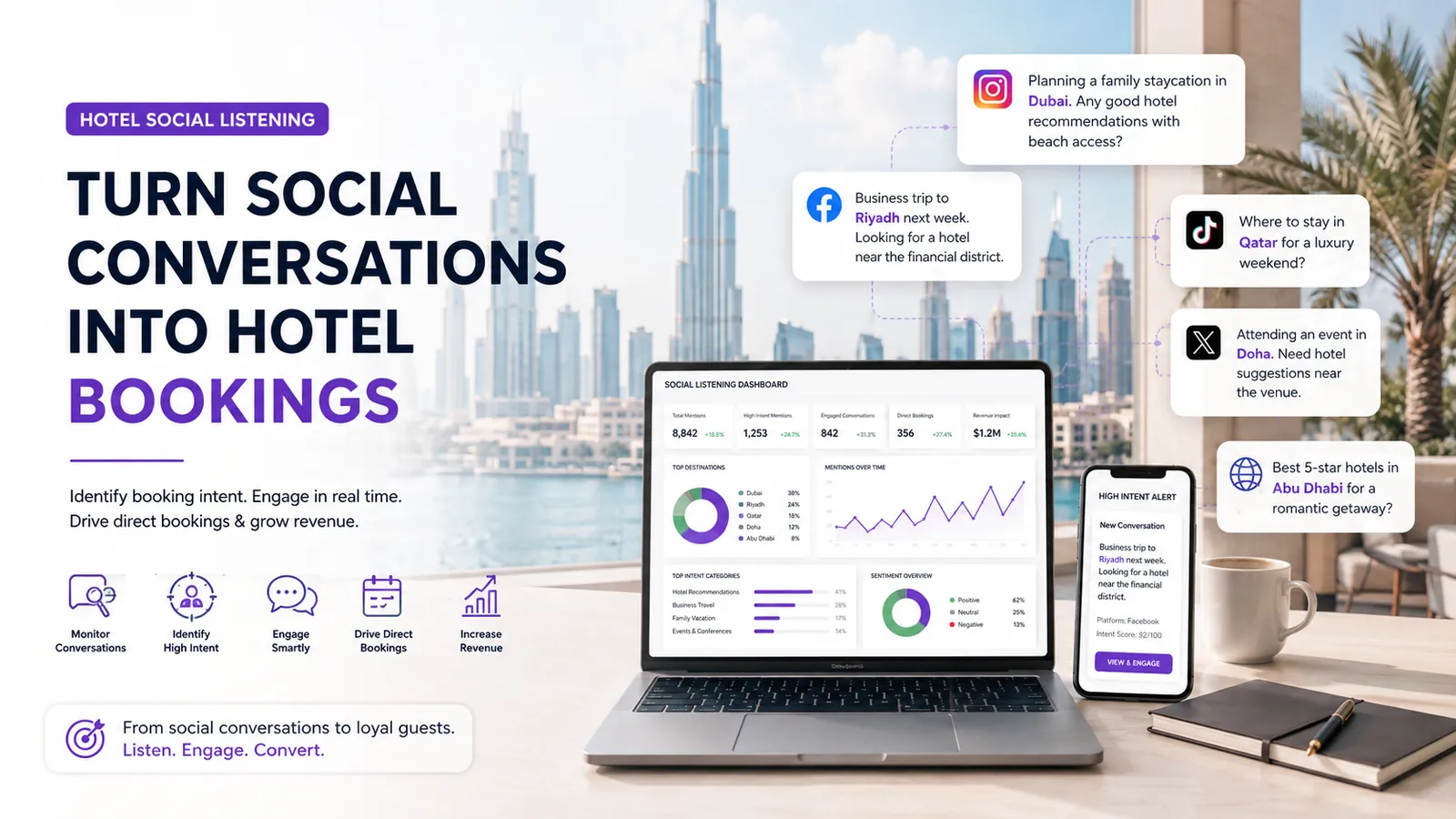
Figure 1: AxcelerateAI Real-Time Hotel Social Listening & Guest Intent Detection Dashboard.
TL;DR — Executive Summary
Travelers post high-intent booking signals across social media long before visiting Booking.com, Expedia, or any OTA. Traditional hotel marketing focuses almost exclusively on publishing content, missing critical direct-booking opportunities, in-stay complaints, and event-driven demand spikes. Hotel social listening uses AI-powered NLP and intent classification to scan public channels in real time — detecting travel plans, destination inquiries, amenity preferences, and service issues the moment they appear. By intercepting these commercial signals instantly, hotels can increase direct bookings, bypass OTA commissions, recover dissatisfied guests during their stay, upsell ancillary services, and build a durable competitive intelligence advantage.
Hotels Are Already Getting Booking Signals on Social Media. Most Aren't Acting on Them.
A potential guest rarely starts their buying journey by announcing, "I am now beginning my hotel search."
Instead, they might post:
"Heading to Dubai next week for a conference — any good hotels close to DIFC?"
Or:
"Need a hotel near the Riyadh Expo for three nights. Any recommendations?"
Or:
"Planning an anniversary trip to Doha. Looking for a hotel with a rooftop restaurant and spa."
Or even:
"Anyone stayed in San Francisco recently for work? What hotel would you actually recommend?"
These are not just social media posts. They are demand signals.
Each post describes a need, a destination, a timeframe, an occasion, or a purchasing problem — and the person who wrote it is often far closer to a booking decision than any follower who passively liked a hotel photograph.
The problem is that most hotel social media strategies are built around publishing content, not detecting and responding to these conversations. That creates a gap between when demand appears and when the hotel notices it.
Hotel social listening can close that gap.
What Is Social Listening for Hotels?
Hotel social listening is the process of monitoring publicly available conversations across social media and online channels to identify brand mentions, buying signals, guest opinions, complaints, trends, and competitor discussions — in real time.
It goes beyond brand monitoring. A modern system can detect conversations around:
- Hotel names, brands, and specific properties
- Destination city travel discussions
- Conferences, trade shows, and major events
- Hotel amenities — pools, high-speed Wi-Fi, spa, dining, gym
- Travel itineraries and date-specific plans
- Room type requirements and group booking needs
- Wedding, anniversary, and celebration stays
- Family vacations and leisure travel
- Corporate and business travel
- Organic hotel recommendation requests
- Rate sensitivity and budget discussions
- In-stay service complaints
- Competitor hotel performance and reviews
- Location-specific accommodation searches
The difference between old-model monitoring and a revenue-oriented approach is significant.
Traditional social media monitoring for hotels asks:
"What are people saying about our hotel?"
A revenue-oriented social listening strategy asks:
"Where is demand appearing right now, and what should we do about it?"
Academic research from Cornell's Center for Hospitality Research has highlighted the value of social listening in hospitality — particularly when hotels use public social posts to personalize guest experiences and respond in real time.
The Revenue Opportunity Hidden in Social Conversations
A hotel has several ways to monetize social listening. The value does not come from collecting more social data — it comes from detecting the right conversation and taking the right action.
1. Capture Guests Before They Reach an OTA
Consider this conversation:
"I'm arriving in Riyadh next Thursday for a week-long project. Where should I stay — something close to King Abdullah Financial District?"
The person is already in-market. They may eventually search Google, open Booking.com, or ask an OTA chatbot — but the hotel does not have to wait.
A social listening platform detects the post, classifies it as a high-intent travel inquiry, and routes it to the hotel's reservations or marketing team within minutes.
A relevant and useful response:
"Welcome to Riyadh! We're located five minutes from KAFD with direct shuttle access. Happy to check availability for your dates — here's a direct link: [booking link]."
The objective is not to broadcast promotions. It is to be useful at the exact moment a traveler is asking for help. That distinction matters. Hotel social media should function as a customer acquisition channel, not merely a content publishing channel.
2. Identify and Score High-Intent Hotel Leads
Not every travel mention represents a commercial opportunity.
"Gorgeous sunset over Marina Bay tonight." — Low commercial intent.
Compare that with:
"Need a hotel in Dubai for this Friday through Tuesday — something with a pool and strong Wi-Fi, ideally under AED 800/night." — Very high commercial intent.
An AI-powered hotel social listening system classifies conversations across multiple intent dimensions simultaneously:
| Signal Dimension | Example from Public Post | Commercial Intent |
|---|---|---|
| Destination only | "Going to Doha" | Low |
| Accommodation need | "Where should I stay?" | Medium |
| Specific dates | "This weekend" | High |
| Amenity preference | "Pool and fast Wi-Fi" | High |
| Budget parameter | "Under AED 800/night" | Very High |
| Event or occasion | "Coming for GITEX" | Very High |
The more signals present in a single post, the higher the intent score — and the faster the system routes it to the right team. This transforms an unstructured social feed into a real-time pipeline of qualified hotel leads.
3. Turn Guest Complaints Into Revenue Protection
Social listening is not only about finding new bookings — it also protects existing revenue.
Imagine a guest, currently checked in, posts:
"Really disappointed with the room at this hotel tonight. Not what I expected at all."
Discovered three days after checkout, the damage is done: a negative TripAdvisor review, lost future stays, and eroded brand trust.
Detected in real time, the story is different. The hotel team can respond within minutes:
"We're truly sorry to hear this. We'd like to make it right straight away — could you DM us your room number so our Guest Relations team can come to you?"
The goal is to move the conversation from public frustration to private resolution — before the guest checks out, before the review is written.
A hotel that resolves an issue during the stay has the opportunity to:
- Retain the guest for future bookings
- Prevent public review escalation
- Recover the relationship and demonstrate genuine care
- Reduce negative word-of-mouth across the guest's network
- Convert a complaint into a positive post-stay review
The financial value is not only the booking saved — it is revenue that the hotel prevents from being lost.
This is where hotel reputation management and social listening converge. Modern reputation management is not just responding to old reviews; it is detecting problems while they are still fixable.
4. Detect Upsell and Ancillary Revenue Opportunities
An underused application of social listening is identifying contextual signals that create high-value upsell moments.
Suppose a guest posts shortly before arrival:
"It's our anniversary next month — looking for something really special in Abu Dhabi."
That post signals an opportunity far beyond a standard room booking. The hotel can present a curated celebration package:
Room upgrade + Anniversary dinner + Floral decoration + Couples spa treatment + Late checkout
Total guest value increases substantially — without the guest feeling sold to, because the offer is genuinely relevant to what they shared.
This model applies particularly well to:
- Luxury hotels and boutique resorts
- Business hotels with private dining
- Wedding and celebration properties
- Wellness and spa resorts
- Family resorts with kids' programs
The principle is simple: Don't use social data to sell harder. Use it to make the offer more relevant to the guest's actual circumstances.
5. Understand What Guests Actually Want
Your hotel's social media strategy tells you what the hotel wants to communicate. Social listening tells you what travelers actually care about.
Your property's Instagram consistently promotes:
"Luxury interiors and stunning architecture."
But public social conversations are dominated by questions like:
"Which hotels in Dubai have solid Wi-Fi for remote work — not just 'high speed' on the website, actually fast?" "Any hotel near Riyadh airport with a 5am breakfast option?" "Which San Francisco hotel actually has a good rooftop that's open to guests?"
These conversations reveal demand gaps your marketing team may not have addressed. The insight can directly generate:
- Purpose-built packages (Remote Work Rate, Early Bird Business, etc.)
- Dedicated landing pages targeting specific traveller types
- Social content that answers real traveller questions
- Operational improvements (earlier breakfast service, faster Wi-Fi upgrades)
- Sales messaging refinements that speak to real needs
The result is a continuous feedback loop between market conversations and hotel commercial strategy.
6. Monitor Competitor Hotels and Market Dynamics
Hotels should not only listen to conversations about themselves — they should listen to the whole market.
When travelers repeatedly post:
"The Meridian is great location-wise but the rooms feel dated." "Four Seasons breakfast is exceptional — worth paying extra." "Staying at the business hotel near the conference. Wi-Fi keeps dropping — not ideal."
That is actionable competitive intelligence. A social listening platform can systematically track:
- Competitor property sentiment trends over time
- Repeated service complaints at rival hotels
- Amenity-specific praise that competitor properties receive
- Rate and value discussions comparing multiple properties
- Event-driven demand going to competitor hotels
Revenue management teams can use this data alongside occupancy, ADR, and RevPAR metrics to sharpen dynamic pricing, refine product positioning, and identify market gaps before they appear in structured reporting.
7. Find Event Demand Before Competitors Do
Events create concentrated, predictable accommodation demand:
- International conferences and trade shows (GITEX, WEF, CES, SXSW)
- Sporting events and tournaments
- Music festivals and concerts
- Corporate summits and investor forums
- Religious events and seasonal gatherings
A conversation like:
"Flying into San Francisco for Dreamforce next week. Where are most people staying that's walking distance to Moscone?"
is a high-value demand signal with clear location intent. A hotel near the venue can respond:
"We're two blocks from Moscone Center and have availability for those dates. We put together an event rate for Dreamforce attendees — here's the link."
This is where AI-powered social listening for hotels creates a structural advantage. Instead of manually searching X, Reddit, or LinkedIn every few hours, the system continuously identifies relevant conversations and escalates the highest-value opportunities to the team that can act on them immediately.
8. Speed Is a Commercial Advantage
Consider two scenarios involving the same kind of social post:
Scenario A: A traveler posts: "Looking for a hotel in Dubai this weekend — somewhere near Downtown." The hotel responds 12 minutes later with a direct booking offer.
Scenario B: The hotel discovers the same type of post three days later, long after the traveler has booked elsewhere.
The conversations are identical. The commercial outcomes are not.
Travel intent decays rapidly. Prospective guests ask questions, receive OTA recommendations, consult friends and forums, and make booking decisions — often within hours. First response time is a genuine competitive variable.
Real-time social listening means engaging while the decision is still open, not after it has already been made.
How a Hotel Social Listening Workflow Actually Operates
A well-designed system converts raw social activity into structured, measurable revenue actions:
  Social Platforms & Community Channels
              │
              ▼
  Real-Time Conversation Collection (30+ Networks)
              │
              ▼
  AI Classification & Entity Extraction
  (Destination · Dates · Amenity · Intent · Sentiment)
              │
              ▼
  Intent Scoring & Priority Assignment
              │
      ┌───────┴────────┐
      ▼                ▼
  High-Intent Lead   Service Complaint / Upsell Signal
  → Reservations     → Guest Relations / Revenue Team
      │                │
      ▼                ▼
  AI-Assisted Response Draft
              │
              ▼
  Human Review & Send (or Automated for Low-Complexity)
              │
              ▼
  Booking / CRM Attribution & Revenue Tracking
At each stage, the system answers five questions:
- Who is this person? (Traveller profile, influence, location)
- What are they trying to do? (Book, complain, request, compare)
- How urgent is this? (Immediate booking intent vs. future consideration)
- What type of signal is it? (Lead, complaint, upsell opportunity, competitor signal)
- What is the next step? (Route to reservations, escalate to guest relations, send a package offer)
What Should a Hotel Actually Measure?
A social listening program must connect to business metrics — not just social engagement metrics. Tracking impressions and follower growth is not sufficient.
Demand Capture KPIs
- High-intent conversations detected per week
- Lead response time (target: under 15 minutes)
- Qualified conversations identified
- Conversations converted to booking inquiries
Direct Revenue KPIs
- Direct bookings attributed to social conversations
- Conversion rate from social inquiry to reservation
- Average booking value from social channel
- Ancillary and upsell revenue generated
- OTA commission savings (direct vs. OTA mix shift)
Guest Experience KPIs
- Complaint detection time (target: under 30 minutes)
- First Response Time (FRT)
- In-stay resolution rate
- Post-stay sentiment improvement
- Guest retention rate
Market Intelligence KPIs
- Competitor share of voice
- Competitor sentiment trends by amenity
- Event-driven demand pacing vs. competitors
- Emerging guest preference signals
This shifts the conversation in leadership presentations from:
"Our social media engagement increased by 18%."
to:
"Our hotel identified 740 high-intent conversations, responded to 510, generated 96 qualified booking inquiries, and attributed $42,000 in direct revenue over the past quarter."
That is a materially more useful conversation for a General Manager, Revenue Director, or Commercial Lead.
Social Listening Is Not the Same as Spying
This point warrants clear attention.
Hotels should not treat social listening as permission to surveil guests' private lives. The strongest approach is based on publicly available conversations, appropriate engagement, and contextual relevance.
Cornell hospitality research specifically emphasizes that hotels should avoid intrusive personalization and engage ethically and legally — responding to conversations guests have chosen to make public.
What good social listening looks like:
"You asked for hotel recommendations close to GITEX. We're located five minutes from the venue — happy to check availability for your dates."
What it should never look like:
"We noticed you're planning a trip next month based on your activity, so here's a targeted offer."
Technology expands what is possible. Judgment determines what is appropriate.
Where AI Changes the Equation
The challenge with social media is not a shortage of data — it is too much data to process manually.
A mid-sized hotel group operating across three cities can receive thousands of mentions, adjacent conversations, and relevant posts every week. A reservations team cannot realistically review all of them in real time.
AI addresses this at scale by automatically:
- Detecting relevant travel and hotel conversations across 30+ public networks
- Understanding destination context, slang, and regional expressions
- Filtering noise, spam, and non-commercial posts
- Scoring booking intent with multi-signal precision
- Distinguishing complaints from general commentary
- Routing high-value leads directly to the correct team
- Generating brand-aligned response drafts for human review
- Tracking whether interactions converted to bookings and attributing revenue
The model is clear: AI handles volume and pattern detection. People handle relationships, judgment, and sensitive situations.
From Social Post to Hotel Revenue — A Worked Example
A traveler posts on LinkedIn:
"Arriving in Riyadh for a three-day investor summit next Wednesday. Need a hotel close to the venue with fast Wi-Fi and a proper early breakfast — any recommendations?"
Here is what an AI-powered hotel social listening workflow does with that post:
Step 1 — Detect: System identifies a public, in-market travel post.
Step 2 — Extract: AI parses key signals:
- Destination: Riyadh
- Duration: 3 nights
- Occasion: Business / Investor Summit
- Amenities required: Fast Wi-Fi, early breakfast
- Timeline: Next Wednesday
Step 3 — Score: Intent classified as Very High (multi-signal match with specific dates, occasion, and amenity requirements).
Step 4 — Route: Alert sent to Reservations team with context summary and suggested response.
Step 5 — Respond: Team sends a personalized reply within 10 minutes with direct booking link and event rate.
Step 6 — Convert: Traveler clicks, confirms three nights, adds breakfast package.
Step 7 — Attribute: Booking logged in CRM, revenue attributed to the social listening pipeline.
That is the difference between using social media for brand awareness and using it as a functioning revenue and acquisition channel.
The Portfolio Opportunity for Hotel Groups
For a single property, social listening improves lead capture and guest experience. For a hotel group operating across multiple cities and markets, the opportunity is considerably larger.
A centralized system can monitor conversations across:
- Multiple properties and brands simultaneously
- Multiple cities — Dubai, Riyadh, Doha, London, Singapore, New York
- Multiple languages and regional dialects
- Competitor properties in each market
- Event-driven demand across all key venues
Portfolio-level insight might surface patterns like:
- "Business travellers in Riyadh are consistently requesting early check-in and express laundry."
- "Dubai properties are receiving competitor complaints about parking — an opportunity to promote our valet service."
- "GITEX week demand is up 40% in conversations; three competitor properties already at capacity."
- "San Francisco guests asking about sustainable hotel practices more than any other market."
These insights inform marketing, operations, revenue management, and product strategy across the entire portfolio — making social listening a component of commercial intelligence infrastructure, not just a marketing channel.
From Content Calendar to Revenue Intelligence
Most hotel marketing teams know how to publish. They schedule posts, manage hashtags, run influencer campaigns, and track engagement metrics.
The next strategic step is listening.
Demand does not always arrive through a booking form or a search query. Sometimes it appears as a question on social media. Sometimes it arrives as a complaint posted mid-stay. Sometimes it surfaces in a discussion thread about a competitor's shortcomings. And sometimes, the person who needs your hotel has never mentioned your hotel at all.
Hotel social listening helps properties detect demand before it becomes an OTA booking, intervene before a complaint becomes a reputation problem, and identify opportunities to increase the value of an existing guest relationship.
The hotels that route these conversations to their sales, reservations, guest relations, and revenue teams — instead of letting them pass undetected — are the ones that can turn social media into something measurably more valuable than a content channel.
They can turn it into a source of demand intelligence and measurable direct revenue.
How AxcelerateAI Can Help Hotels
At AxcelerateAI, we build AI-powered social listening and agentic engagement solutions that help hospitality enterprises monitor conversations, identify commercial intent, and respond to relevant opportunities in real time.
For hotels and hotel groups, the platform is designed to:
- Detect relevant travel and accommodation conversations across 30+ public channels
- Identify high-intent booking signals with multi-dimensional NLP intent scoring
- Analyze guest sentiment, complaint patterns, and in-stay experience signals
- Monitor competitor properties and market demand shifts continuously
- Prioritize and route high-value conversations to the correct team automatically
- Recommend or automate relevant, brand-compliant responses
- Track outcomes through direct revenue attribution, CSAT improvement, and OTA mix shift
The goal is not to generate more social media activity. The goal is to help hotels capture more demand, protect more revenue, and create better guest experiences.
Ready to turn social conversations into hotel revenue?
Contact AxcelerateAI to explore how AI-powered social listening and engagement can be integrated into your hotel's marketing, guest experience, and revenue strategy.
Frequently Asked Questions
Q: What is hotel social listening? Hotel social listening is the process of monitoring public social media conversations to identify hotel-relevant signals — including booking intent, guest complaints, event-driven demand, and competitor mentions — using AI to detect and act on these signals in real time.
Q: How does social listening help hotels increase direct bookings? By detecting public posts from travelers actively seeking accommodation recommendations, social listening allows hotels to engage prospective guests before they visit OTAs — enabling direct booking conversations that bypass 15–25% commission fees.
Q: How is social listening different from reputation management? Reputation management focuses on responding to reviews after guests have left. Social listening extends this to detecting real-time conversations — including in-stay complaints, recommendation requests, and competitor mentions — while there is still time to act.
Q: What platforms does hotel social listening cover? A comprehensive system monitors X (Twitter), Instagram, Facebook, Reddit, LinkedIn, TikTok, and travel forums, as well as review aggregators like TripAdvisor — covering structured and unstructured public conversation simultaneously.
Sources and Evidence
This article is informed by academic hospitality research and current industry guidance on social listening, guest experience, reputation management, and direct-booking strategy.
Cornell University's Center for Hospitality Research documents how social listening enables personalized, real-time guest engagement. Cornell research specifically highlights a luxury hotel group that used social listening to engage guests posting from its properties — with the research reporting measurable positive long-term effects on RevPAR and customer engagement metrics.
Current hotel industry sources increasingly position active social monitoring and reputation management as contributors to direct booking visibility, guest trust, and competitive differentiation.
Related Capabilities & Further Reading
- AI Social Media Engagement Solution — Explore our enterprise platform for real-time social listening, automated engagement agents, and signal capture across Reddit, X, LinkedIn, and 30+ networks.
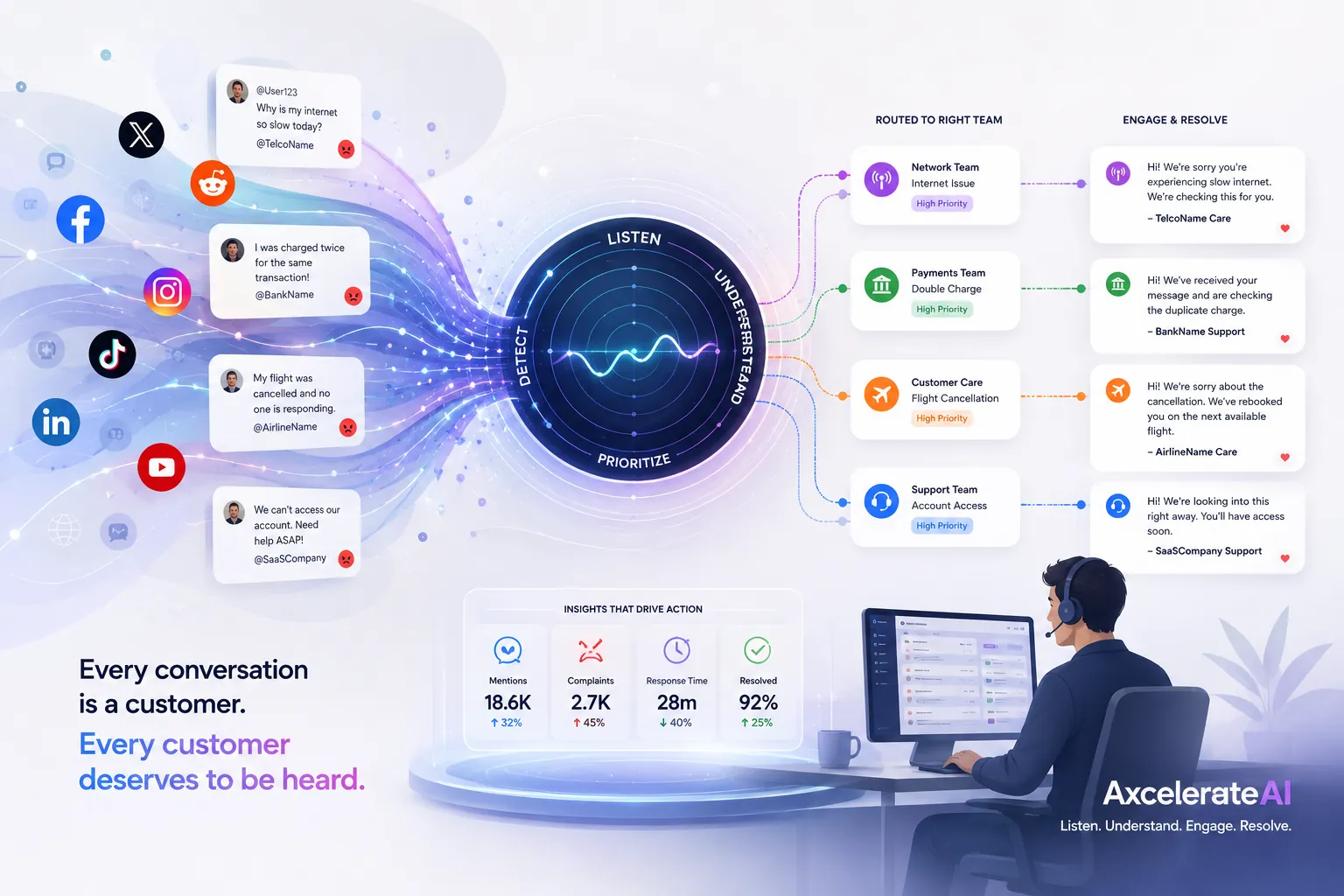
- Social Listening for Customer Support — How AI-powered social listening transforms public complaints into actionable support tickets, reducing resolution times and protecting customer lifetime value.
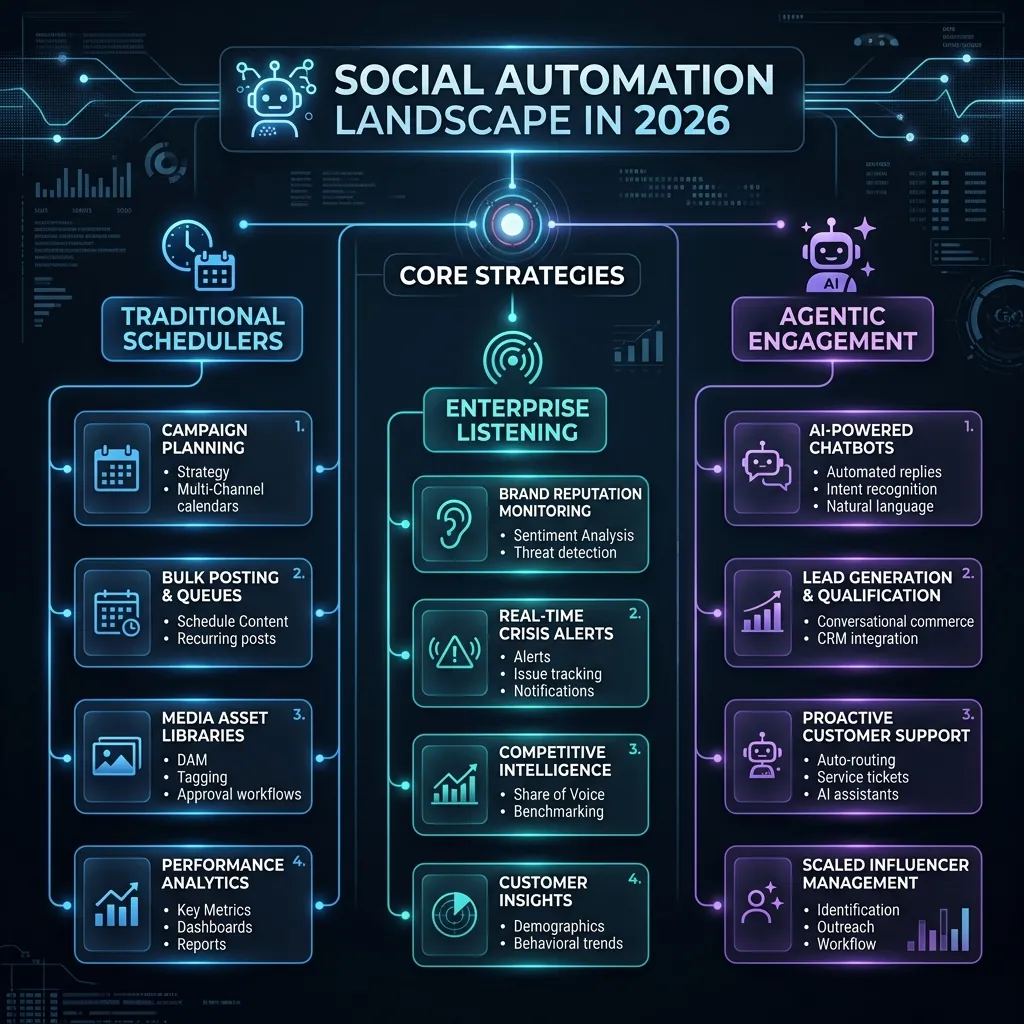
- Which Social Media Automation Tool Should You Use in 2026? — A structured comparison of traditional post schedulers, passive listening dashboards, and next-generation agentic engagement engines.