High-quality data is crucial for training robust and accurate AI models. Traditional data collection methods, however, are often hindered by high costs, time constraints, and privacy concerns. Enter synthetic data generation—a revolutionary approach that addresses these challenges by creating artificial data for training AI models.
The ability to generate high-quality, artificial data is a core component of generative ai consulting services, offering a flexible and scalable alternative to traditional data collection. This article explores the concept of synthetic data, delving into its technical aspects, benefits, and diverse applications.
Synthetic data refers to data that is artificially generated rather than collected from real-world sources. It is created using algorithms, simulations, or statistical methods to replicate the statistical properties and relationships of real datasets. The generation of synthetic data involves several techniques, including:
Synthetic data is particularly useful in scenarios where real data is scarce or sensitive:
Synthetic data is increasingly used to develop and test diagnostic tools (e.g., synthetic medical images for training AI systems for detecting anomalies).
In the financial sector, synthetic data is used to test and validate fraud detection systems. It is also increasingly vital for creating robust datasets to train models for ai in credit risk management, improving a bank's ability to assess and mitigate lending risk.
Retailers use synthetic data to enhance customer experience and optimize inventory management by simulating customer behavior and transaction patterns.
Synthetic data is valuable in training NLP models, particularly when dealing with low-resource languages or specific domains.
A notable example of synthetic data use is Waymo's approach to developing autonomous driving technology. Waymo employs a combination of real-world data and synthetic data to train its AI models. The company generates virtual environments that include diverse driving scenarios, such as different weather conditions, traffic patterns, and road types.
By incorporating synthetic data, Waymo can expose its AI models to a wide range of situations that might not be present in real-world data alone. This comprehensive training helps improve the system's ability to handle various driving conditions and make safer decisions on the road. The integration of synthetic data into Waymo's development process has contributed to significant advancements in autonomous vehicle technology.
Challenges include ensuring that synthetic data accurately represents real-world conditions, balancing synthetic and real data to avoid struggles in real-world scenarios, and addressing ethical concerns related to bias and fairness.
The future of synthetic data generation looks promising, with ongoing advancements in AI and machine learning technologies. This progress will enable new applications and enhance the capabilities of AI systems across various industries.
Unsure if your existing data is enough to train a robust AI model?

Unlock PropTech automation. Learn how our custom AI uses Computer Vision and geometric reasoning to extract data from floor plans, reducing costs.

.png)
Automate grading, curriculum mapping, and student records. See 5 top use cases where IDP and OCR transform academic operations.
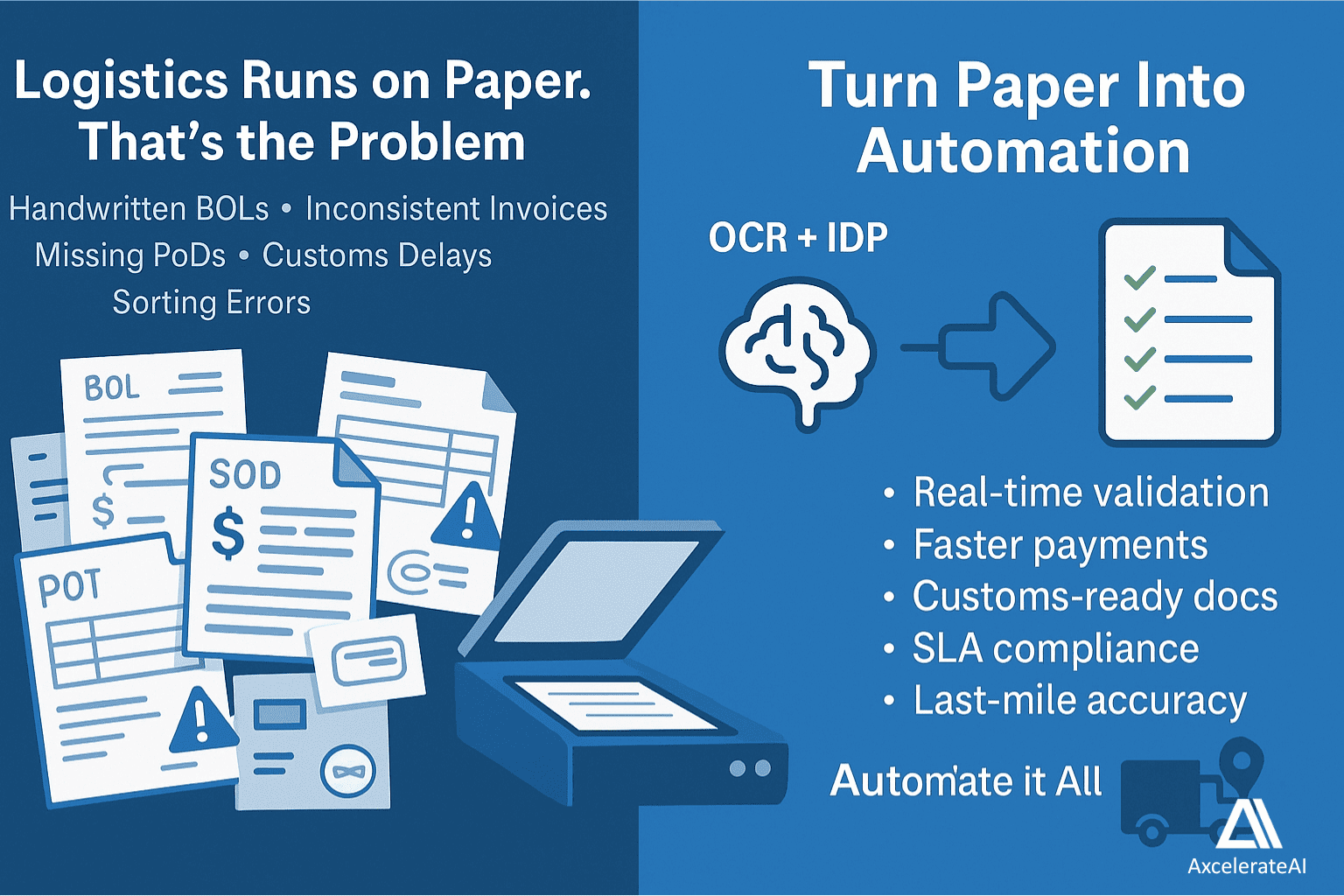
Unlock logistics efficiency with OCR and IDP: Automate inventory, supply chain tracking, and compliance. See real examples from DHL and Maersk.
Unlock PropTech automation. Learn how our custom AI uses Computer Vision and geometric reasoning to extract data from floor plans, reducing costs.
Automate grading, curriculum mapping, and student records. See 5 top use cases where IDP and OCR transform academic operations.
Unlock logistics efficiency with OCR and IDP: Automate inventory, supply chain tracking, and compliance. See real examples from DHL and Maersk.

AxcelerateAI offers cutting-edge AI solutions, specialising in building and deploying custom machine learning models to help businesses optimise operations, enhance decision-making, and drive growth.