Case study
CRE Market Forecasting & Predictive Analytics Platform
- Client: Reath AI
- Industry: Real Estate & PropTech
- AI capability: Predictive Analytics
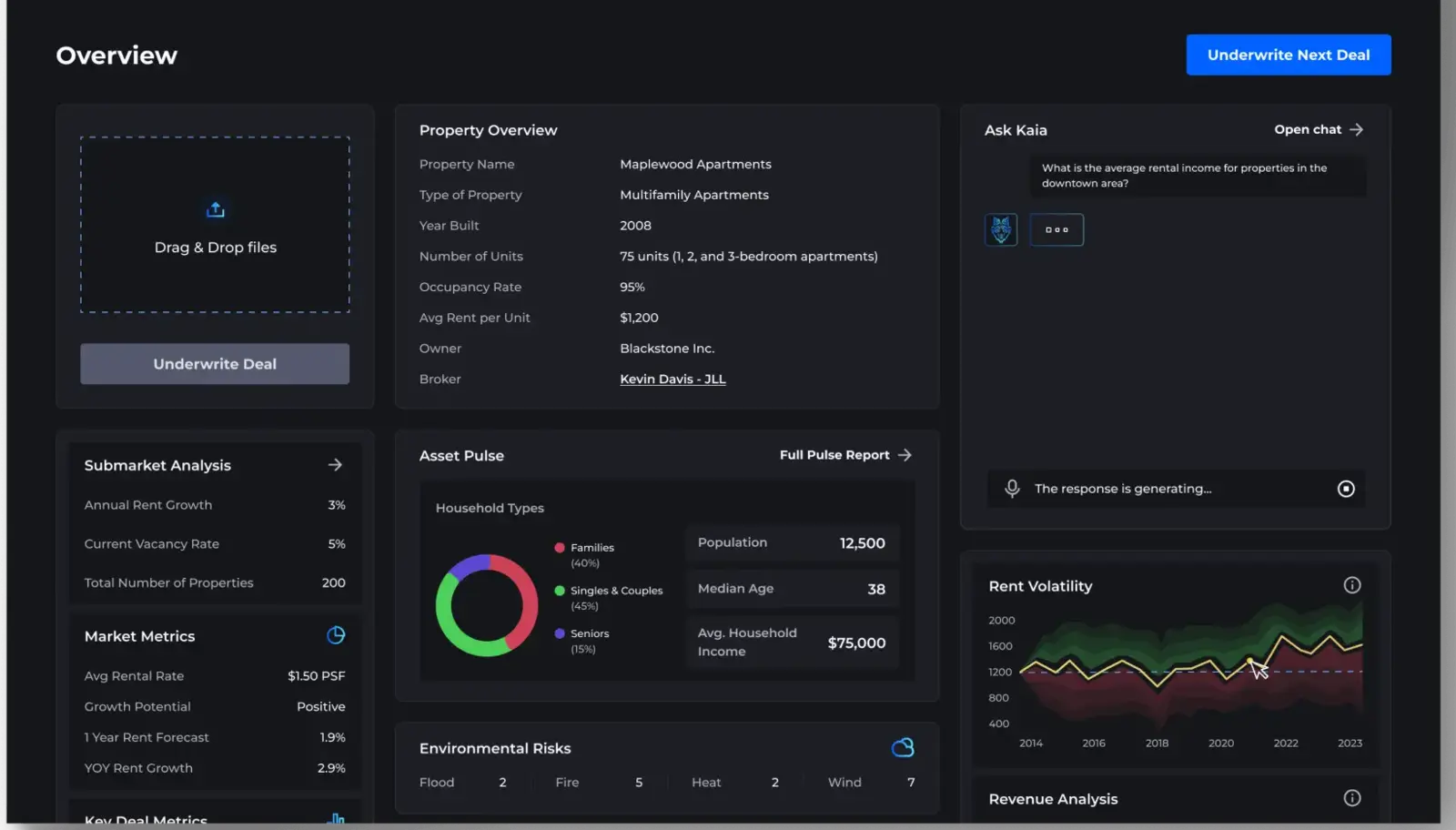
- Less research overhead for investors
- 70%
- Average variance against real-world rates
- <4%
The challenge
The data investors need sits in five unrelated places
An investment thesis combines demographics, crime statistics, rental comps, historic rent runs and population growth. Each source arrives in its own shape.
Reath AI needed more than charts: the platform had to normalise those datasets into forecasts, and model what a specific property would earn after a renovation.
What we built
A predictive platform for hyper-local markets
Ingest, normalise, forecast, then price the renovation.
- Rental comps
- Comp set
- Demographics
- Census tract
- Crime rates
- Local
- Historic rent runs
- Monthly
- Local news
- Parsed
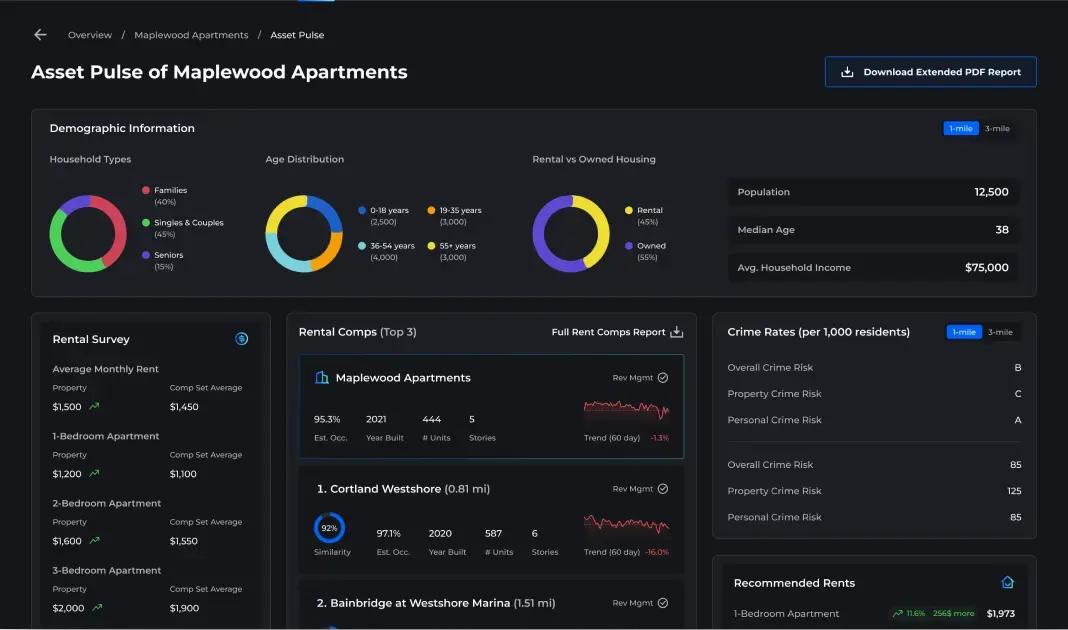
1/4Public market data, demographic reports and local news are collected and normalised per submarket.
Investment decisions need data from unrelated places: comps, demographics, crime, local news and rent history. The platform pulls them together, forecasts rent and prices the renovation before anyone visits the property.
Automated data pipeline
Market data, demographics and public records are ingested and normalised on a schedule.Unstructured sources too
Local news and reports are parsed for the signals that move a submarket.Rental growth forecasting
Feature-engineered models project rents per asset class, with an average variance under 4% against real rates.Machine learningStatistical modellingRenovation simulator
Condition improvements are modelled to project post-renovation value and prioritise capital spend.
The impact
Less research per deal, with a number attached
- 70% less research overhead
- Under 4% average variance against real rates
- Renovation ROI simulated per property
Investors get submarket analysis, a rent forecast and recommended rents in one report, which cut research overhead by 70%.
Forecasts run at an average variance under 4% against real-world rates, and the renovation simulator ranks where capital is best spent.
Keep exploring
Related case studies
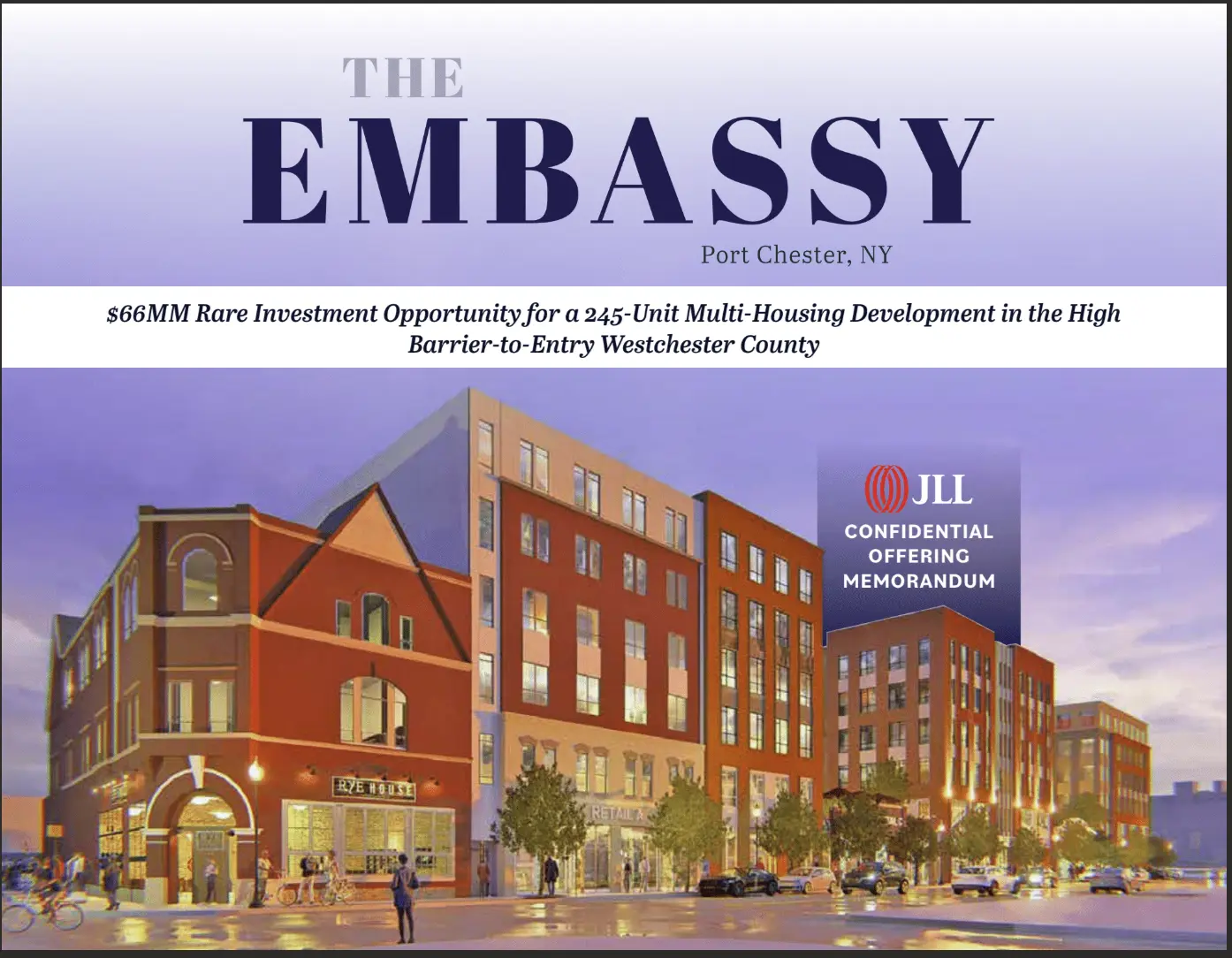 Real Estate & PropTechIntelligent Document Processing
AI Offer Memorandum Parsing & Investment Intelligence
For commercial real estate brokers, lenders, and investors, evaluating an Offering Memorandum (OM) is a massive bottleneck. These 40-150 page documents are packed with crucial investment data hidden in complex tables, paragraphs, and financial projections that take hours to manually process.
- OM analysis time, down from several hours
- <3 min
- Extraction accuracy on critical financial fields
- 95%+
 Real Estate & PropTechComputer Vision
AI Property Image Intelligence for Listing Optimization & Compliance
PropTech founders and real estate leaders understand that property photos are the most critical asset in closing deals. PropTexx needed an automated way to enforce strict listing compliance and extract valuable insights from millions of unstructured real estate images without slow manual review.
- Property features tagged automatically
- 50+
- Compliance violation types detected
- 15+
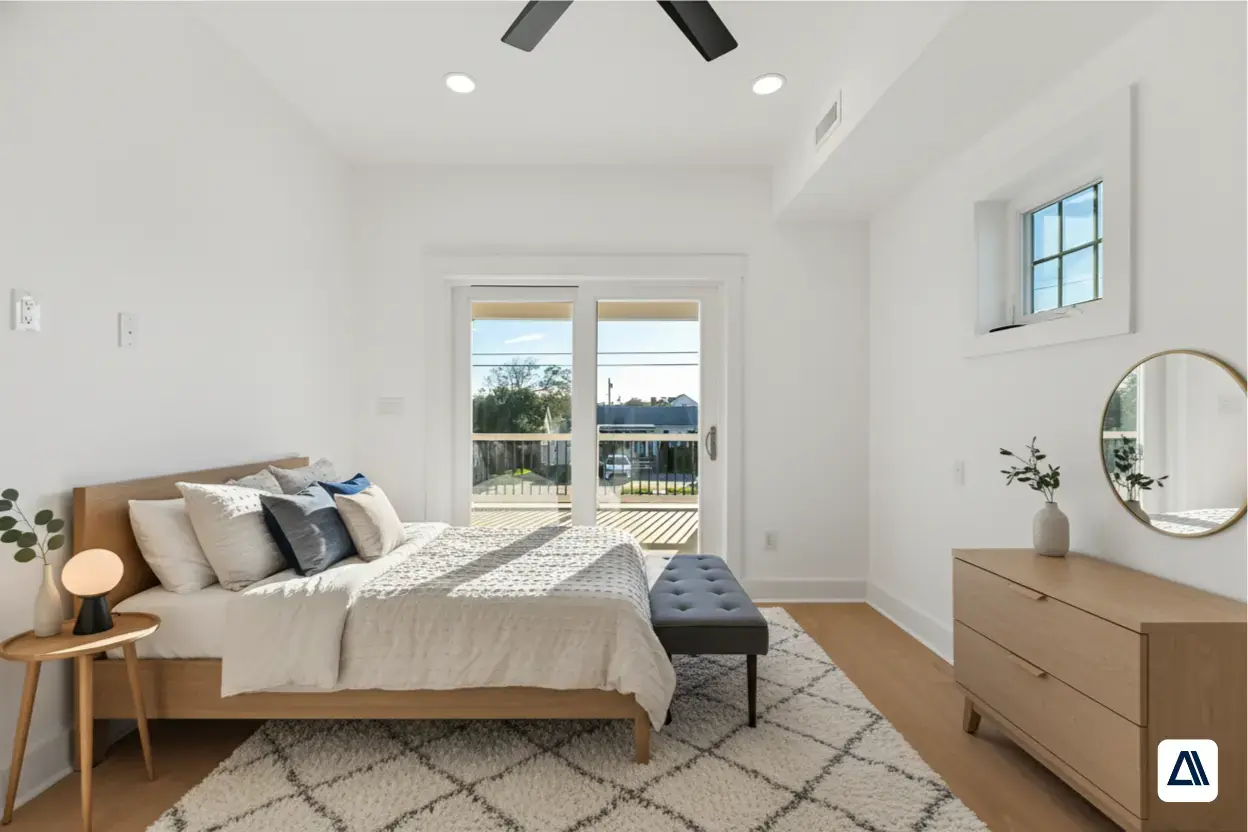 Real Estate & PropTechGenerative AI
AI-Powered Virtual Staging and Renovation
Buyers respond better to furnished rooms, but physical staging is expensive and slow. PropTech founders and real estate agency owners need a highly scalable, photorealistic virtual staging automation tool that works instantly.
- Lower staging cost than physical staging
- 90%+
- Increase in inbound leads on staged listings
- 40%
Book a strategy session
Talk to an AI engineer about your project
Tell us what you want to automate. The first call is a 30-minute working session with an engineer, not a sales pitch.
- Send the form, it takes 2 minutes
- We reply within 1 business day, under NDA if you need it
- A 30-minute call to scope feasibility and next steps