Imagine trying to tend a large farm where every single plant needs a different amount of water, fertilizer, and care. You cannot manage that complexity just by walking around and guessing. You need perfect information. That is the situation facing modern agriculture: massive fields, changing weather, and the threat of pests mean guessing costs millions of dollars in lost crops and wasted resources.
We need a dependable way to turn complex data—from satellite images and soil sensors—into simple, actionable instructions for every inch of the field. This required capability is not just about farming; it's about Custom AI solutions built to predict, manage, and optimize every single step of the growing process.
Artificial Intelligence involves creating smart computer systems that can perform tasks normally done by a human, such as complex decision-making and recognizing patterns in data. In farming, AI's ability to quickly process vast amounts of information enables farm management levels that were impossible with only human labor.
The main job of AI in agriculture is to analyze data from various farm operations to support better decision-making and optimize farming practices. This smart analysis helps farmers increase crop yields, reduce waste, and significantly lower the physical workload required to manage the land.
AI-driven systems bring together data from satellites, drones, ground sensors, and local weather stations to provide a complete picture of the farm's health. This allows for what we call precise farming, ensuring resources go only where they are needed.
AI-powered tools can predict how productive a crop will be and monitor soil conditions with remarkable accuracy, using data collected from sensors and aerial images. This allows farmers to quickly identify problem areas that require immediate attention, enabling them to concentrate their efforts more strategically and efficiently across the land.
These technologies do more than just check current soil health. They can also predict future conditions, helping farmers fix potential issues before they become widespread problems. Moreover, AI is a major help in the early detection of pests and disease outbreaks through advanced image recognition algorithms.
The systems analyze images from cameras and drones to identify tiny signs of disease before they become widespread. This early detection is vital because timely interventions can prevent the loss of entire crops, protecting farmers' income and the food supply chain for everyone.
AI significantly optimizes the use of critical resources such as water, fertilizers, and pesticides. By employing predictive analytics and real-time data, these smart systems can make precise recommendations for where and how much resource to use. This not only makes these resources more effective but also helps enhance the sustainability of farming by preventing environmental damage from overuse.
Robotic technology, driven by AI, has also optimized the way crops are harvested. These smart robots can operate independently, identifying and picking ripe produce with speed and precision that humans cannot match. This technology greatly increases the efficiency of the harvesting process and reduces food loss due to improper handling or timing.
The success of AI development services in agriculture is shown by the measurable results achieved by companies deploying these technologies. The automation of repetitive and labor-intensive tasks through AI significantly reduces the need for manual labor, thereby lowering operational costs for farmers across the board.
The enhanced precision in farming techniques that AI enables also helps in minimizing resource wastage, which further reduces expenses and enhances the farm's profitability. This enhanced capability is vital for meeting the increasing global food demands caused by a growing world population.
AgEagle Aerial Systems Inc. is a prime example of a company integrating AI and robotics into agricultural practices. They use drones equipped with AI to monitor crop health, assist with irrigation schedules, and apply fertilizers exactly where needed. These drones capture detailed aerial images, which are processed through AI algorithms to provide deep insights into soil health and crop conditions. This technology helps farmers optimize their resource usage, improve crop yields, and make powerful data-driven decisions that save time and money.
While the promise is huge, integrating AI into traditional farming operations presents significant challenges. One of the primary difficulties is scalability, especially in less developed regions that have limited access to advanced technological infrastructure. Bridging this digital divide is essential for the widespread adoption of AI in agriculture, ensuring its benefits can be enjoyed universally.
As technology continues to advance, the future of agriculture looks promising with even more precise insights and automation expected. These advancements are likely to further refine crop management techniques, increase yields, and reduce environmental impacts, setting the stage for a more productive and sustainable agricultural industry.
AI is transforming agriculture into a precise, sustainable, and profitable science. Predictive analytics, computer vision, and smart automation help farmers cut waste, boost yields, and protect the environment—even in the face of climate challenges.
At AxcelerateAI, we build custom AI solutions in Agriculture tailored exactly to your fields and goals. Ready to grow smarter? Contact us for specialized AI Consulting Services for your agricultural land and start growing your farm with precision AI.

Unlock PropTech automation. Learn how our custom AI uses Computer Vision and geometric reasoning to extract data from floor plans, reducing costs.

.png)
Automate grading, curriculum mapping, and student records. See 5 top use cases where IDP and OCR transform academic operations.
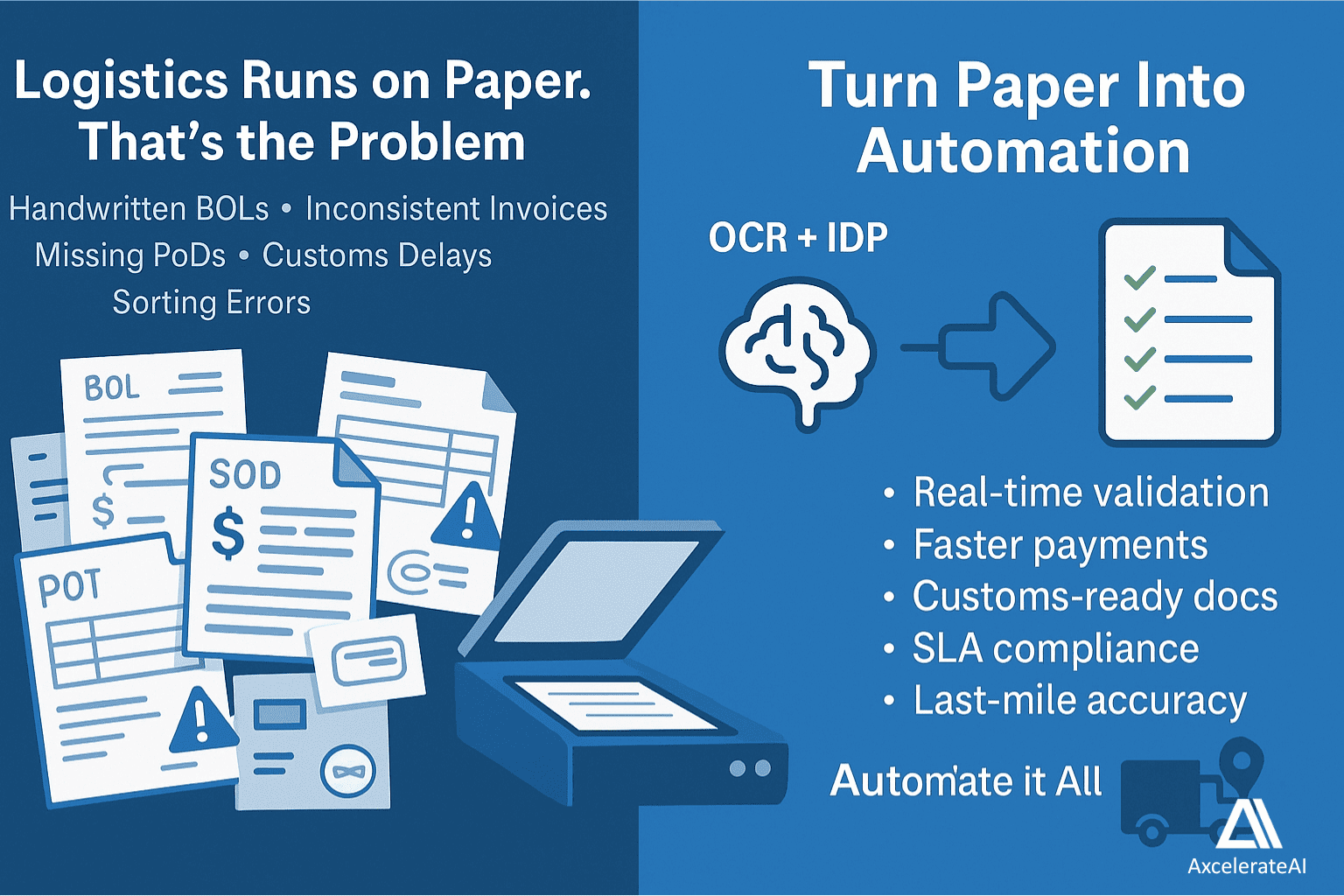
Unlock logistics efficiency with OCR and IDP: Automate inventory, supply chain tracking, and compliance. See real examples from DHL and Maersk.
Unlock PropTech automation. Learn how our custom AI uses Computer Vision and geometric reasoning to extract data from floor plans, reducing costs.
Automate grading, curriculum mapping, and student records. See 5 top use cases where IDP and OCR transform academic operations.
Unlock logistics efficiency with OCR and IDP: Automate inventory, supply chain tracking, and compliance. See real examples from DHL and Maersk.

AxcelerateAI offers cutting-edge AI solutions, specialising in building and deploying custom machine learning models to help businesses optimise operations, enhance decision-making, and drive growth.