Case study
X-ray to 3D CT Reconstruction & Knee Alignment Analytics
- Client: Hospital based in the US
- Industry: Health & Fitness
- AI capability: Computer Vision
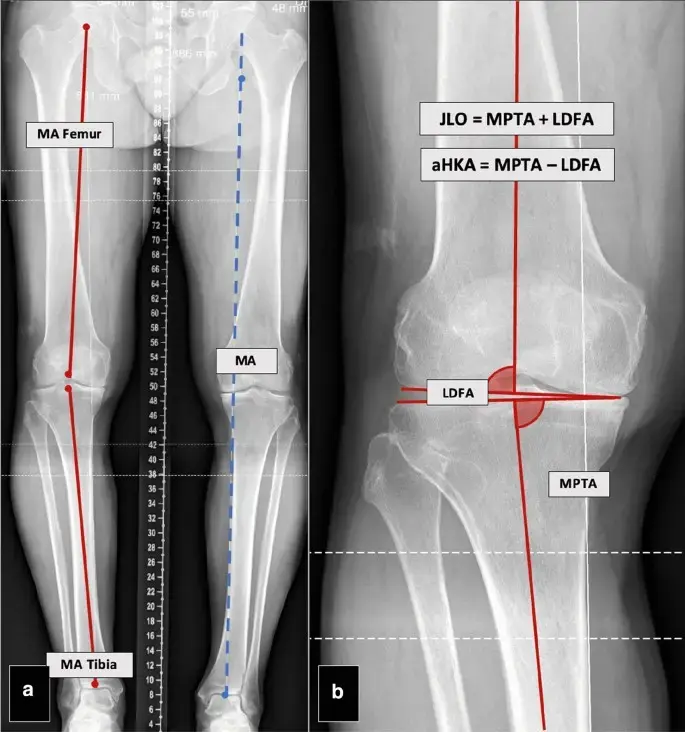
- Bone geometry estimated from standard X-rays
- 2D → 3D
- Plus mHKAA, LDFA and MPTA calculated automatically
- CPAK
- Cloud deployment for clinical access
- AWS
- Delivered for a hospital in the US
- 2024
The challenge
3D answers from a flat image
Assessing lower limb alignment usually calls for 3D imaging. X-rays are cheaper and easier to get, but they lack the volumetric depth of a CT scan. Turning a 2D X-ray into a 3D reconstruction precise enough for clinical screening is hard.
The system had to find and measure bone angles such as the lateral distal femoral angle (LDFA) and medial proximal tibial angle (MPTA) as an initial screening tool. It needed to work across varied patient anatomy with approximately 75–80% accuracy, which called for a specialised deep learning approach.
2D to 3D mapping
Estimating the shape and depth of bones from a single flat projection.Reconstruction precision
3D estimates reliable enough for screening, at approximately 75–80% accuracy.Anatomical variability
Results that hold up across different patients' knee structures and conditions.Cost versus quality
Useful 3D insight from low-cost X-ray imaging, before a CT is ordered.
What we built
A deep learning pipeline from X-ray to alignment angles
We built the pipeline around 2D to 3D image registration and generative reconstruction. Trained on paired medical data, it predicts 3D bone geometry from flat projections, then an analytics layer takes the orthopedic measurements.
- Stage 1
Take a standard X-ray as input
The system starts from a regular 2D X-ray, so no extra imaging is needed for the initial evaluation.2D X-ray image - Stage 2
Segment bones and find landmarks
Automated bone segmentation locates key anatomical landmarks, including the femoral condyles and the functional flexion-extension (F/E) axis.Landmarks and surgical axesBone segmentationLandmark detection - Stage 3
Reconstruct the 3D bone structure
A neural network trained with Generative Adversarial Networks (GANs) estimates 3D bone geometry from the 2D input, with training focused on keeping the anatomy realistic.Estimated 3D bone geometry2D to 3D registrationGANs - Stage 4
Calculate alignment angles
An analytics engine calculates CPAK, mHKAA, LDFA and MPTA automatically, and overlays the results on the image for review.Standardised angle measurementsCPAKmHKAALDFAMPTA - Stage 5
Serve it from the cloud
The deep learning pipeline runs on AWS so results come back quickly and the system scales as more images come in.Fast turnaround for cliniciansAWS
Input image
- Modality
- 2D X-ray
- View
- Standing, hip to ankle
- Extra imaging
- None
A CT scan would give 3D detail, but costs several times more than an X-ray.
1/4Input is a standard 2D X-ray of the leg: cheaper and more widely available than a CT scan.
Illustrative sample: the leg is a drawing and the angle values are examples, not patient data.
Results and impact
3D-assisted screening at the cost of an X-ray
The system gives clinicians a tool for initial orthopedic screening. Automating the angle calculations supports surgeons in the early stages of preoperative planning and patient evaluation, before more expensive imaging is needed.
- 3D-assisted insight from a standard X-ray
- Alignment angles measured the same way every time
- A simpler first step in the clinical workflow
Lower cost of early evaluation
Initial screening starts from an X-ray instead of a CT scan.Consistent measurements
CPAK, mHKAA, LDFA and MPTA are calculated automatically rather than by hand.Faster preoperative planning
Surgeons get alignment data early, while deciding next steps.- Computer vision model training
Built on custom computer vision
Segmentation, landmark detection and reconstruction models trained for this task.
Project showcase
Angle calculation in action
A recording of the system calculating leg alignment angles, including an initial mHKAA and CPAK assessment.
Keep exploring
Related case studies
 Real Estate & PropTechComputer Vision
AI Property Image Intelligence for Listing Optimization & Compliance
PropTech founders and real estate leaders understand that property photos are the most critical asset in closing deals. PropTexx needed an automated way to enforce strict listing compliance and extract valuable insights from millions of unstructured real estate images without slow manual review.
- Property features tagged automatically
- 50+
- Compliance violation types detected
- 15+
 Health & FitnessGenerative AI
PharmaBrain: Private, Air-Gapped LLM for Medical Research
Atacana needed a private, air-gapped LLM deployment: a medical research assistant that answers complex questions over thousands of proprietary news reports and drug discovery updates each day, without any data leaving its own servers.
- Offline, on local servers
- 100%
- Parameter Mixtral MoE, 8-bit quantized
- 46.7B
 Retail & E-commerceComputer Vision
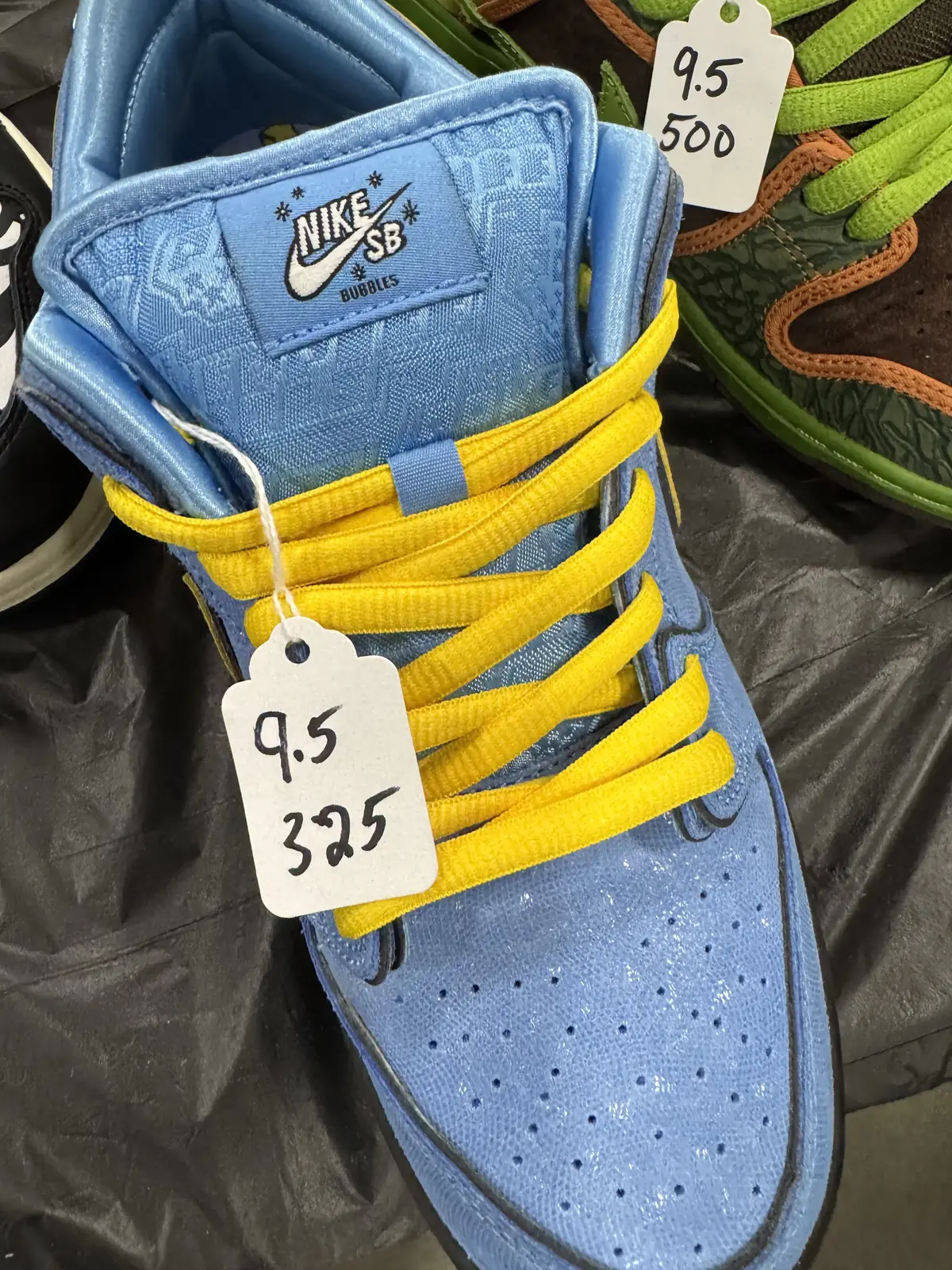
Sneaker Visual Retrieval System
AlwaysLegit needed a way for their team at expos to instantly identify shoes from photos and match them against a massive 150K+ SKU database, often in challenging real-world lighting and backgrounds.
- SKUs searchable from a single photo
- 150K+
- Retrieval time per query
- <1s
Book a strategy session
Talk to an AI engineer about your project
Tell us what you want to automate. The first call is a 30-minute working session with an engineer, not a sales pitch.
- Send the form, it takes 2 minutes
- We reply within 1 business day, under NDA if you need it
- A 30-minute call to scope feasibility and next steps